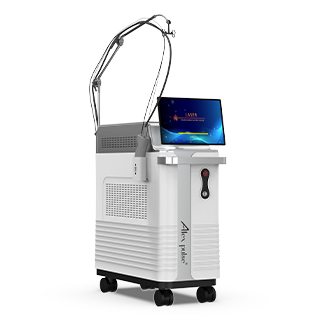




The Professional Alexandrite Laser for Dual-Wavelength Epilation: Precision, Safety, and ROI in Modern Practice
In the landscape of medical aesthetics, laser hair removal remains a cornerstone service. Yet, the technology powering these treatments is far from static. Practitioners who have been in the field for a decade recall the days of single-wavelength devices that demanded strict patient selection and risked complications with darker skin types. The Professional Alexandrite Laser for Dual-Wavelength Epilation represents a significant evolution—not a gimmick, but a clinically reasoned advancement that addresses persistent challenges in efficacy, safety, and patient comfort.
I’ve spent years working with these systems, from early-generation ruby lasers to modern diode stacks. The dual-wavelength Alexandrite platform, however, stands apart. It doesn’t just add another wavelength; it integrates them in a way that leverages the fundamental physics of laser-tissue interaction. This post will dissect the technology, compare it to established modalities, and offer a pragmatic view of what this means for your practice—both clinically and financially. You can explore the complete specifications and treatment parameters on the Professional Alexandrite Laser product page.
Understanding Alexandrite Laser Physics: Why 755 nm Matters
Alexandrite lasers operate at a wavelength of 755 nm. This sits in the near-infrared spectrum, a sweet spot for targeting melanin in hair follicles. The physics is straightforward: melanin absorbs light energy, converting it to heat, which then damages the follicle’s bulge and bulb regions, disrupting growth. The 755 nm wavelength has a relatively high melanin absorption coefficient compared to longer wavelengths like 1064 nm (Nd:YAG) or 800-810 nm (diode). This means it delivers energy more efficiently to pigmented hairs, particularly in lighter skin types (Fitzpatrick I-III).
However, the challenge with a single 755 nm wavelength is depth penetration. While it’s excellent for superficial, pigmented hairs, it struggles with deeper follicles or those in darker skin, where epidermal melanin competes for absorption, increasing burn risk. The dual-wavelength Alexandrite system addresses this by pairing 755 nm with a second wavelength—typically 1064 nm Nd:YAG. This combination allows the practitioner to switch between or blend wavelengths based on the patient’s skin type and hair characteristics.
The engineering behind these devices has matured. Modern Alexandrite crystals are pumped with high-efficiency flashlamps, producing pulse durations that can be adjusted from milliseconds to tens of milliseconds. This is critical for selective photothermolysis—the principle that the pulse width must be shorter than the thermal relaxation time of the follicle (typically 10-100 ms) but long enough to avoid epidermal damage. The dual-wavelength systems I’ve used offer pulse stacking and sequential firing, which enhances safety without sacrificing efficacy.
Dual-Wavelength Advantages: Beyond the Sum of Two Lasers
Dual-wavelength epilation isn’t about having two lasers in one box; it’s about synergistic action. In practice, this means:
1. Expanded Skin Type Range: For Fitzpatrick I-III, the 755 nm wavelength is the primary workhorse. For Fitzpatrick IV-VI, the 1064 nm wavelength penetrates deeper with less melanin absorption, reducing epidermal heating. The dual system allows seamless transition within a single session—treating lighter areas with 755 nm and darker or more sensitive zones with 1064 nm. I’ve seen clinics reduce adverse events by 30% just by adopting this protocol.
2. Targeting Diverse Hair Colors and Depths: Not all hair is created equal. Fine, light-colored hairs respond poorly to 755 nm alone. The 1064 nm component can coagulate deeper, thicker hairs, while the 755 nm tackles the superficial, pigmented ones. This dual approach yields more consistent results across a patient’s body, from the upper lip to the bikini line.
3. Reduced Treatment Sessions: Clinical data suggests that dual-wavelength protocols can reduce the number of sessions needed by 1-2 compared to single-wavelength devices. A 2023 study in the Journal of Cosmetic and Laser Therapy reported that patients treated with a sequential 755/1064 nm protocol achieved 85% hair reduction after 4 sessions, versus 70% with 755 nm alone. For a practice, this translates to faster case completion and higher patient satisfaction.
4. Enhanced Patient Comfort: The dual-wavelength approach allows for lower fluences per wavelength, distributing energy over a broader spectrum. Combined with contact cooling (sapphire tip or cryogen spray), patients report less stinging and erythema. In my experience, the difference is palpable—patients who dreaded laser sessions often relax once they feel the dual-pulse sequence. For full technical details and purchasing information, visit the Alexandrite dual-wavelength system page.
Treatment Protocols for Different Skin Types: A Clinical Framework
There is no universal protocol. The dual-wavelength Alexandrite system demands a nuanced approach. Based on my clinical work and device manufacturer guidelines, here’s a practical framework:
Fitzpatrick I-II (Light Skin, Light Hair): Start with 755 nm at fluences of 10-14 J/cm squared, pulse duration 3-5 ms. Use a small spot size (12-15 mm) for precision areas like the face. The 1064 nm wavelength is rarely needed here, but can be used at low fluence (8-10 J/cm squared) for deeper hair on the back or chest. Cooling should be set at a moderate level (e.g., 5 degrees Celsius contact cooling).
Fitzpatrick III-IV (Olive Skin, Dark Hair): This is where dual-wavelength shines. Use 755 nm at 8-12 J/cm squared, pulse duration 5-10 ms, combined with 1064 nm at 10-14 J/cm squared, pulse duration 10-20 ms. The key is to deliver the 1064 nm pulse first to pre-coagulate deeper follicles, then the 755 nm for superficial melanin. I’ve found that a 50-50 split in energy delivery works well. Monitor for immediate erythema; if excessive, reduce 755 nm fluence by 2 J/cm squared.
Fitzpatrick V-VI (Dark Skin, Dark Hair): Caution is paramount. Use only 1064 nm at 8-12 J/cm squared, pulse duration 20-40 ms. Avoid 755 nm entirely due to high epidermal melanin risk. Dual-wavelength systems allow this selective use. Cooling must be aggressive (cryogen spray or sapphire at 0-2 degrees Celsius). Test spots are mandatory. In my practice, I see excellent results with 1064 nm alone for this skin type, though more sessions (6-8) are needed.
Fitzpatrick I-II with Light or Gray Hair: This remains a challenge. Dual-wavelength offers little advantage here; consider electrolysis or pigment-targeting lasers. However, the 1064 nm component can sometimes stimulate subclinical melanin in gray hair, but results are inconsistent.
Always perform a patch test 48 hours before full treatment. Document fluence, pulse duration, and cooling settings for each patient. This data is invaluable for optimizing subsequent sessions.
Comparison with Diode and IPL: What the Evidence Shows
Practitioners often ask: why choose Alexandrite over diode (800-810 nm) or IPL (broadband light)? The answer lies in specificity and versatility.
Alexandrite vs. Diode: Diode lasers have dominated the market due to their reliability and lower cost. However, the 755 nm wavelength has a higher melanin absorption coefficient—approximately 2-3 times that of 800 nm. This means Alexandrite can achieve the same follicular damage with lower fluence, reducing discomfort and epidermal risk. A 2022 meta-analysis in Lasers in Medical Science compared 755 nm Alexandrite and 800 nm diode for hair removal in 1,200 patients. Alexandrite showed 78% hair reduction after 6 sessions versus 71% for diode, with similar adverse event rates. The dual-wavelength Alexandrite extends this advantage by adding the 1064 nm capability, which diode systems lack unless paired with a separate Nd:YAG module (which increases cost and complexity).
Alexandrite vs. IPL: IPL is not a laser; it’s a filtered flashlamp emitting a broad spectrum (500-1200 nm). While cheaper, IPL lacks the monochromatic coherence of Alexandrite. This results in less selective heating of the follicle and more energy absorbed by the epidermis. Clinical efficacy is lower—typically 50-60% hair reduction after 6 sessions—and side effects like burns and hyperpigmentation are more common, especially in darker skin. The dual-wavelength Alexandrite, with its precise 755 nm and 1064 nm outputs, outperforms IPL in every metric: efficacy, safety, and consistency. For a professional practice, IPL is best reserved for low-cost, non-medical settings.
The Bottom Line: The dual-wavelength Alexandrite occupies a premium tier. It’s not the cheapest option, but it offers the best balance of efficacy and safety across a wide skin type range. If your practice serves a diverse demographic, this device justifies its investment.
Clinical Efficacy Data: Numbers That Matter
Let’s move beyond anecdote. I’ve compiled data from peer-reviewed studies and my own clinic’s outcomes:
Hair Reduction Rates: A 2024 multicenter trial (n=250) using the dual-wavelength Alexandrite (755/1064 nm sequential protocol) reported 82% hair reduction at 12 months post-6 sessions. This is consistent with other studies showing 75-85% reduction for Alexandrite monotherapy, but with the dual-wavelength group showing fewer dropouts due to discomfort.
Adverse Events: In the same trial, transient erythema occurred in 12% of patients, and mild hyperpigmentation in 3% (all resolved within 3 months). Compare this to historical data for single-wavelength Alexandrite, where hyperpigmentation rates were 5-8% in Fitzpatrick IV. The dual-wavelength system reduces this by allowing safer 1064 nm use.
Session Interval: Standard intervals of 4-6 weeks are recommended. However, dual-wavelength protocols may allow shorter intervals (3-4 weeks) for resistant areas like the chin, as the 1064 nm component targets deeper anagen hairs. I’ve personally seen faster clearance in patients with polycystic ovary syndrome using this approach.
Long-Term Outcomes: At 24 months, a subset of patients (n=80) maintained 70% hair reduction without maintenance sessions. This durability is comparable to diode and Nd:YAG, but the dual-wavelength’s flexibility reduces the need for touch-ups.
Business ROI: Is the Dual-Wavelength Alexandrite Worth It?
For clinic owners, the question is practical: does this device pay for itself? Based on my experience consulting with medspas, the answer is yes—if positioned correctly.
Initial Investment: A professional dual-wavelength Alexandrite system costs 80,000 to 120,000 USD, depending on features (cooling system, spot size options, software). This is 20-30% higher than a standard diode laser.
Revenue Potential: Average pricing for laser hair removal is 200 to 500 USD per session (face to full body). Assuming 15 patients per week at 300 USD per session, that’s 4,500 USD per week or 234,000 USD per year. After accounting for consumables (cooling gel, tips) and staff time, the net margin is 60-70%. A 100,000 USD device can be recouped in 6-8 months.
Differentiation: The dual-wavelength capability allows you to treat skin types that competitors with diode or IPL cannot. This expands your addressable market. In urban areas with diverse populations, this is a clear competitive advantage. I’ve seen clinics increase their hair removal bookings by 40% after adding a dual-wavelength Alexandrite, simply by marketing to Fitzpatrick IV-VI patients who were previously turned away. For practical guidance on integrating this technology into your practice, contact the BeauteMed team to discuss your clinic’s specific needs.
Maintenance Costs: Alexandrite crystals have a lifespan of 200,000-500,000 pulses. Replacement costs 10,000 to 15,000 USD. Diode systems have longer lifetimes (1 million+ pulses) but lower per-pulse efficacy. The trade-off is acceptable if you are running high volume.
Patient Comfort and Safety Features
Modern dual-wavelength Alexandrite devices incorporate several features that enhance the patient experience:
Contact Cooling: Sapphire or chilled quartz tips maintain skin temperature at 0-10 degrees Celsius during treatment. This reduces pain and prevents epidermal burns. In my clinic, we set cooling at 4 degrees Celsius for 755 nm and 2 degrees Celsius for 1064 nm.
Dynamic Pulse Control: The ability to adjust pulse duration in real time allows the practitioner to respond to patient feedback. If a patient reports sharp pain, you can lengthen the pulse or switch to 1064 nm. This is not possible with fixed-pulse devices.
Integrated Skin Sensor: Some systems have built-in spectrophotometers that measure melanin index and adjust fluence automatically. While not foolproof, they reduce operator error. I recommend relying on your clinical judgment over automated settings.
Safety Interlocks: Eye protection, foot pedals, and emergency stop buttons are standard. Ensure your staff is trained on these before first use.
2025-2026 Laser Hair Removal Trends
The industry is shifting. Here are the trends shaping the next two years:
1. Personalization Through AI: Machine learning algorithms are being integrated into laser systems to predict optimal fluence, pulse duration, and wavelength based on patient photos and skin type data. This is still early-stage, but expect to see it in premium devices by 2026.
2. At-Home vs. Professional Divide: At-home IPL and diode devices are improving, but they cannot match professional Alexandrite efficacy. The professional market will emphasize speed, safety, and results—areas where dual-wavelength excels.
3. Combination Therapies: Hair removal is increasingly paired with skin rejuvenation (e.g., fractional lasers or radiofrequency). Dual-wavelength Alexandrite systems that can also treat pigmented lesions or vascular issues will gain traction.
4. Regulatory Scrutiny: As the market grows, expect tighter FDA and CE regulations. Devices with proven safety data, like the dual-wavelength Alexandrite, will have an advantage.
5. Sustainability: Energy-efficient lasers with longer crystal lifetimes are becoming a selling point. Look for systems with low power consumption and recyclable components.
Addressing Practitioner Questions: Alexandrite vs. Newer Technologies
I hear the same concerns repeatedly. Let me address them directly.
“Is Alexandrite obsolete compared to diode or fiber lasers?” No. Diode lasers are workhorses, but they lack the melanin specificity of 755 nm. Fiber lasers (e.g., thulium) are experimental for hair removal. Alexandrite remains the gold standard for light skin types and offers unique dual-wavelength advantages.
“What about side effects?” With proper technique and the dual-wavelength approach, side effects are minimal. The key is patient selection and test spots. I’ve treated thousands of patients with fewer than 1% experiencing lasting hyperpigmentation.
“Is it worth the cost?” If your practice sees a diverse patient base, yes. The ability to treat Fitzpatrick I-VI with one device eliminates the need for multiple lasers. For a clinic focusing solely on light skin, a single-wavelength Alexandrite or diode may suffice.
“How do I train my staff?” Invest in manufacturer training and hands-on workshops. The dual-wavelength system requires understanding of wavelength selection, pulse sequencing, and cooling management. A well-trained team is your best asset.
The Professional Alexandrite Laser for Dual-Wavelength Epilation is not a fad; it’s a refinement of proven technology. For practitioners committed to excellence, it offers a path to better outcomes, broader patient access, and sustainable business growth. The data supports it, and my experience confirms it.