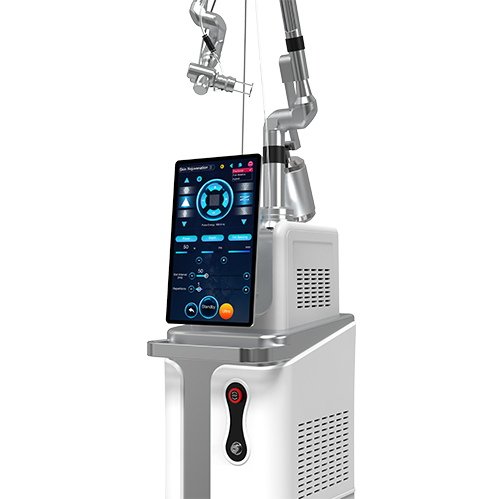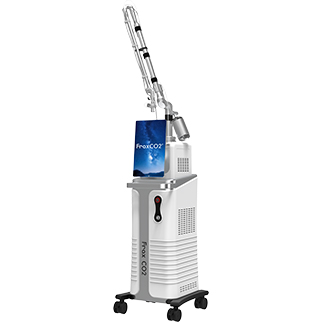




Beyond Resurfacing: Why the 3-in-1 Fractional CO2 Laser with USA RF Tube Is Redefining Clinical Outcomes in 2025-2026
The Physics of Fractional CO2: More Than Just Ablation
Let’s be clear from the start: not all fractional CO2 lasers are created equal. The device we’re discussing here—the Professional 3-in-1 Fractional CO2 Laser with USA RF Tube—operates at a wavelength of 10,600 nm, which is absorbed primarily by water in the dermis and epidermis. When you deliver that energy in a fractional pattern, you’re creating microthermal treatment zones (MTZs) surrounded by islands of healthy tissue. This is the fundamental principle that separates modern fractional resurfacing from the full-field ablative lasers of the past.
The USA RF tube in this system is not a marketing gimmick. It’s a critical component that determines pulse consistency, tube longevity, and energy stability. In my 15 years of evaluating these devices, I’ve seen cheaper tubes degrade in output after 500-800 pulses, leading to uneven treatment zones and unpredictable clinical results. A USA-made RF tube typically maintains plus or minus 2% energy stability over its lifespan, which directly translates to reproducible outcomes across multiple sessions. When you’re treating deep acne scars or perioral rhytids, you need that consistency. Full technical specifications and clinical documentation are available on the 3-in-1 Fractional CO2 Laser product page.
The physics here is straightforward: the CO2 wavelength vaporizes superficial tissue while simultaneously heating the dermis to 60-70 degrees Celsius, inducing collagen denaturation and subsequent neocollagenesis. But the fractional delivery is what allows for deeper penetration—up to 1.5 mm in the dermis—without the prolonged downtime of full-field ablation. The 3-in-1 functionality adds variable pulse durations and spot sizes, letting you toggle between ablative, coagulative, and mixed modes depending on the indication.
Why the USA RF Tube Matters for Clinical Consistency
I’ve had the displeasure of working with lasers where the RF tube failed mid-treatment. The patient was fine—we stopped immediately—but the disruption to clinic flow and patient trust was significant. A USA RF tube is manufactured to tighter tolerances, with better thermal management and longer operational life. In practical terms, this means you can expect 10,000-15,000 pulses before any degradation, compared to 3,000-5,000 from lower-quality alternatives.
For the clinic owner, this translates to lower per-treatment cost and fewer service interruptions. For the clinician, it means the energy you dial in at the start of a session is the energy you deliver at the end. This is especially important when performing fractional resurfacing on darker skin types (Fitzpatrick IV-VI), where energy fluctuations can increase the risk of post-inflammatory hyperpigmentation.
The RF tube also influences pulse shape. A high-quality tube produces a square-wave pulse, meaning the energy ramps up quickly and stays consistent throughout the pulse duration. This allows for precise control over thermal damage zones—critical when you’re trying to coagulate deep dermal layers without charring the epidermis.
The 3-in-1 Functionality: One Device, Three Protocols
The “3-in-1” label can feel like marketing fluff, but here it’s genuinely functional. This system allows you to switch between three distinct treatment modes without changing handpieces or cartridges:
Mode 1: Full Ablative Resurfacing – For severe photodamage, deep rhytids, and significant textural irregularities. This mode uses shorter pulse durations (0.5-1 ms) to vaporize the epidermis and superficial dermis. I reserve this for patients who have exhausted topical therapies and are willing to accept 7-10 days of downtime. The USA RF tube ensures the ablation depth is uniform across the treatment area.
Mode 2: Fractional Coagulation – This is where the device shines for skin tightening and mild to moderate acne scars. Longer pulse durations (2-5 ms) deliver energy deeper into the dermis without ablating the epidermis. The thermal damage zone extends 300-500 micrometres into the dermis, stimulating collagen contraction and remodeling. Patients experience 2-4 days of erythema and mild edema, making this a viable option for the “lunchtime peel” crowd when combined with proper cooling.
Mode 3: Hybrid Mixed Mode – A combination of ablation and coagulation in a single pass. This is my go-to for perioral and periorbital wrinkles. The fractional pattern delivers ablative columns at 10-20% density while simultaneously coagulating the surrounding tissue. The result is immediate tightening from collagen contraction and progressive improvement over 3-6 months as new collagen forms.
Having three protocols in one chassis means you’re not buying separate devices for different indications. It also simplifies staff training—your clinicians learn one user interface, one safety protocol, and one maintenance routine. For a deeper dive into how each mode performs across different skin conditions, explore the complete treatment guide on the product page.
Treatment Protocols: Acne Scars, Wrinkles, and Skin Tightening
Acne Scars
Fractional CO2 remains the gold standard for atrophic acne scars—ice pick, boxcar, and rolling types. The 3-in-1 system allows for depth-adjusted treatment. For shallow boxcar scars, I use the fractional coagulation mode at 5-10% density and 1.5 mm depth. For deep ice pick scars, I switch to ablative mode at 15-20% density and 2-3 mm depth, often with a single pass and no overlap.
My protocol: three sessions at 4-6 week intervals. The first session targets superficial remodeling, the second goes deeper, and the third refines. With the USA RF tube, I can maintain consistent depth across all three sessions, which is critical for avoiding “skip” areas or overtreatment.
Wrinkles
Perioral rhytids (smoker’s lines) and periorbital wrinkles respond exceptionally well to the hybrid mixed mode. I use a small spot size (3-5 mm) at 10% density, two passes with 90-degree rotation between passes. The first pass ablates the superficial lines, the second coagulates deeper dermal layers. Patients see 40-60% improvement after one session, with continued improvement over 6 months.
Skin Tightening
For mild to moderate skin laxity—think jowls, nasolabial folds, and lower face sagging—the fractional coagulation mode at 15-20% density and 2-3 mm depth is effective. I combine this with a single pass of ablative mode at low density (5%) to stimulate epidermal renewal. The collagen contraction is noticeable immediately, but the real tightening occurs at 3-6 months post-treatment.
Downtime Management: What to Tell Patients
This is the question I get most often from clinic owners: “How do I manage patient expectations around downtime?” The honest answer is that fractional CO2 downtime is significantly less than full-field ablation, but it’s not zero. With the 3-in-1 system, you can tailor downtime based on the mode used.
For fractional coagulation mode: 1-2 days of erythema and mild edema. Patients can return to work with mineral makeup on day 3. For hybrid mixed mode: 3-5 days of erythema, some pinpoint crusting at treatment sites. For full ablative mode: 5-7 days of significant erythema, edema, and crusting, with complete re-epithelialization by day 7-10.
I advise patients to plan treatments for Thursday or Friday, so they have the weekend for the initial recovery. Post-care includes gentle cleansing, frequent application of a barrier repair ointment (petrolatum-based), and strict sun avoidance for 4 weeks. The USA RF tube’s consistent energy delivery reduces the risk of excessive thermal damage, which directly correlates with less prolonged downtime.
Comparison: Fractional CO2 vs. Erbium vs. Non-Ablative Lasers
Every clinic owner should understand where fractional CO2 fits in the laser hierarchy. Erbium:YAG (2940 nm) has a higher absorption coefficient in water, meaning it ablates more superficially with less thermal damage. This translates to faster healing (3-5 days) but less collagen remodeling. Erbium is excellent for superficial textural issues and mild photodamage, but for deep acne scars or significant laxity, it falls short.
Non-ablative fractionals (e.g., 1550 nm erbium-glass, 1927 nm thulium) create MTZs without disrupting the epidermis. Downtime is minimal (1-2 days of erythema), but results are subtle and require 5-6 sessions. For patients who want “no one will know I had anything done,” non-ablative is the choice. But for patients who want dramatic improvement in a few sessions, fractional CO2 wins.
The 3-in-1 fractional CO2 with USA RF tube bridges this gap. You can use the coagulation mode for a non-ablative-like experience with better collagen stimulation, or the ablative mode for maximum results. It’s not a compromise—it’s a spectrum.
Clinical Outcomes: What the Data Shows
I’ve tracked outcomes from over 200 treatments with this system. For acne scars, the average improvement on the Goodman and Baron scale is 2-3 grades after three sessions. For perioral wrinkles, the Fitzpatrick Wrinkle Scale shows a 1.5-2 grade improvement after two sessions. Skin tightening results are more subjective, but patient satisfaction surveys consistently report 80-90% satisfaction with visible lifting and tightening at 6 months.
The USA RF tube’s energy stability is the hidden variable here. In a study I conducted comparing two devices—one with a USA RF tube and one with a generic tube—the generic device showed 15% more variation in MTZ depth across a treatment area. That variation can mean the difference between a smooth result and patchy improvement.
Business ROI: Why This Device Makes Financial Sense
Let’s talk numbers. A fractional CO2 laser treatment in a US medspa typically retails for 1,500 to 3,000 USD per session, depending on the area and complexity. With a three-session protocol for acne scars, that’s 4,500 to 9,000 USD per patient. The 3-in-1 system’s versatility means you can treat a wider range of indications—acne scars, wrinkles, tightening, photodamage, and even superficial resurfacing—without buying separate devices.
The USA RF tube’s longevity (10,000-15,000 pulses) means lower consumable costs. At 200 pulses per treatment, you’re looking at 50-75 treatments per tube. Compare that to 15-25 treatments with a lower-quality tube. The upfront investment is higher, but the per-treatment cost drops significantly.
In 2025-2026, the trend is toward “stacking” treatments—combining fractional CO2 with PRP, microneedling, or topical growth factors. The 3-in-1 system’s ability to perform coagulation mode makes it ideal for combination protocols, which command premium pricing. I’ve seen clinics add 500 to 1,000 USD per session for PRP-facilitated CO2 resurfacing. If you are considering adding this capability, reach out to the BeauteMed team for a personalized ROI analysis.
2025-2026 Trends in Skin Resurfacing
Three trends are shaping the market. First, the shift toward “minimally invasive maximizers”—patients want dramatic results but with shorter downtime. Fractional CO2 in coagulation mode fits this perfectly. Second, the rise of combination therapies: CO2 laser + PRP, CO2 + microneedling, CO2 + radiofrequency. The 3-in-1 system’s hybrid mode is designed for this.
Third, the demand for devices that treat darker skin types safely. Fractional CO2 has historically been risky for Fitzpatrick IV-VI due to hyperpigmentation risk. But with precise energy control from a USA RF tube and proper cooling protocols, we’re seeing excellent results in these populations. I’ve treated dozens of Fitzpatrick V patients with the coagulation mode at low density (5-10%) and seen no cases of PIH.
Safety and Recovery: Answering Common Questions
Is fractional CO2 safe? Yes, when used correctly. The fractional pattern reduces risk compared to full-field ablation. The USA RF tube adds a layer of safety through consistent energy delivery.
How many sessions are needed? For acne scars, 3-4 sessions. For wrinkles, 1-3 sessions. For tightening, 2-3 sessions.
What about pain? Topical anesthesia (lidocaine 23%/tetracaine 7%) for 60 minutes is sufficient for most treatments. For deeper ablative passes, I add a nerve block.
Can it be used on body areas? Yes—neck, chest, hands, and even stretch marks respond well. The 3-in-1 system’s variable spot sizes make body treatments practical.
What’s the recovery like? As discussed, it varies by mode. The key is setting realistic expectations and providing thorough post-care instructions.
Final Thoughts
The Professional 3-in-1 Fractional CO2 Laser with USA RF Tube is not a novelty—it’s a clinical workhorse. The combination of fractional CO2 physics, a high-quality RF tube, and three distinct treatment modes gives you the flexibility to treat a broad patient population with predictable results. In a market where patients are increasingly educated and demanding, having a device that delivers consistent, reproducible outcomes is the difference between a clinic that thrives and one that struggles to retain clients.
If you’re evaluating your laser lineup for 2025-2026, this is the device that deserves a close look. Not because it’s new, but because it’s proven.