



Best Laser Hair Removal Machine for Clinics: A 2026 Buyer’s Guide
1. Three Things to Nail Down First
2. The Five Specs That Decide Performance
3. Diode, Alexandrite, Nd:YAG: What Each Is For
4. Which Machine Fits Your Clinic
5. Three BeauteMed Machines, Three Jobs
6. Mistakes That Cost Clinics Money
7. Questions Clinic Owners Ask Most
8. What Laser Hair Removal Will Not Do
Three Things to Nail Down Before You Compare a Single Spec
Your budget. Professional laser hair removal machines run from roughly $5,000 to $18,000 across the range we build, and the spread is there for a reason. A $5,000 machine and a $15,000 machine are not doing the same job for the same client. I have watched clinics overspend on a specialist machine they barely used, and I have watched others buy the cheapest option and turn away half their clientele. We broke the full pricing down in a separate guide if you want the numbers.
Your clients’ skin types. This is the one most owners skip. Laser hair removal targets melanin, and melanin varies enormously across skin types. A machine that is excellent on light skin can be useless, or worse, unsafe, on darker skin. If your clinic serves a mixed population, you need four-wavelength coverage, not two. Fitzpatrick skin types I through VI do not respond to the same wavelength, and pretending they do is how a clinic gets a complaint or, worse, a burn.
Your daily volume. A single-room clinic seeing six clients a day has different needs than a five-room medspa doing forty. Faster treatment speed costs more up front and pays itself back faster the busier you are. I have seen busy clinics make back the price difference on a faster machine in under six months.
.webp)
The Five Specs That Actually Decide Performance
Ignore the marketing copy. Read these five numbers.
Wavelength. For hair removal, three wavelengths matter most. 755nm is absorbed most strongly by melanin, so it clears fine, light hair on light skin fastest. 808nm is the diode workhorse, deep enough for most skin types. 1064nm is safest for darker skin because it bypasses epidermal melanin. A machine with all three, like the four-wavelength diode systems we build, covers Fitzpatrick skin types I through VI without you swapping equipment between clients.
Spot size. This is where speed lives. A 12x12mm spot treats a small area in many passes. A 12x36mm spot covers three times the area in one pass. Larger spots penetrate deeper and cut treatment time on large areas like legs and backs by 30 to 50 percent. If you do full-body sessions, this one spec changes your whole day.
Cooling. Pain is the number one reason clients quit a hair removal series before it finishes. Contact cooling through a sapphire window, pushed down to -45 degrees Celsius, lets you treat dark skin and sensitive areas without numbing cream and a flinch. Air cooling cannot match it, and the difference shows up fast in client retention.
Power. Output wattage matters, but only in combination with spot size. More raw watts with a small spot wastes energy. Read the system as a whole, not the wattage alone. Two machines can advertise the same wattage and deliver very different fluence to the skin.
Handle lifespan. A handle rated for 200 million shots outlasts one rated for 100 million, and the difference shows up as downtime and replacement cost in years two and three. This is the number nobody puts on the front of the brochure, and it is the one that decides your long-term cost per treatment.
Diode, Alexandrite, Nd:YAG: What Each One Is For
Diode (808nm-class, multi-wavelength). The modern default for a mixed-clientele clinic. Four wavelengths in one machine, contact cooling, and a wide spot make it the most versatile choice for day-to-day volume. This is what most new clinics start with, and for good reason.
Alexandrite (755nm). The fastest on light skin. If your client base is predominantly Fitzpatrick I through III and wants speed, this clears fine hair faster than anything else. The tradeoff is that it is not built for darker skin unless you buy the dual-wavelength version, which raises the price.
Nd:YAG (1064nm). The safe route for darker skin. Slower and less comfortable without strong cooling, but it is the right tool when your client list is Fitzpatrick IV through VI. It is often bought as a second machine rather than a first.
Which Machine Fits Your Clinic
Just opening, mixed clientele, one machine that does it all. Start with a four-wavelength diode system. It covers every skin type, it is fast enough for a growing book, and it will not force you to turn away darker-skinned clients while you build. This is the setup I would point a first-time owner toward eight times out of ten.
High-volume, high-turnover medspa. You want the biggest spot size and the fastest repetition rate you can afford. The time you save per session is money, and on forty clients a day it compounds fast. A dynamic spot that adjusts per body area saves you the most minutes here.
Specialist skin-of-color practice. Go straight to a machine with true 1064nm Nd:YAG capability, or a four-wavelength diode with serious contact cooling. Air-cooled alexandrite is the wrong tool here, and I have seen clinics learn that the expensive way.
Three BeauteMed Machines, Three Different Jobs
| Machine | Wavelengths | Spot | Cooling | Price | Best for |
|---|---|---|---|---|---|
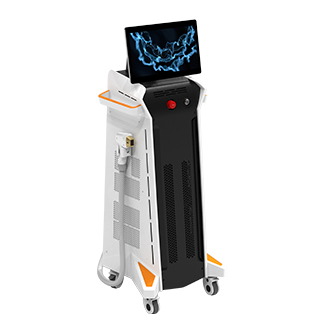
| AresLite DM40 Pro | 755 / 808 / 940 / 1064nm | 12×12 + 12x24mm | DCS to -45°C | $5,000–$8,500 | New clinics, mixed clientele |
| AresLite DM60 | 755 / 808 / 940 / 1064nm | Dynamic 6×6–12x36mm | DCS to -45°C | $6,500–$8,900 | High-volume medspas |
| Professional Alexandrite | 755nm and/or 1064nm | Standard | Air cooling | $9,200–$18,000 | Light-skin speed / deep-skin safety |
AresLite DM40 Pro is the four-wavelength workhorse. It runs 755nm, 808nm, 940nm and 1064nm in one non-crystal diode system, with DCS cooling down to -45 degrees Celsius, a 200-million-shot handle, and dual spot sizes of 12x12mm and 12x24mm. Priced from $5,000 to $8,500, it is our most common first machine for new clinics. See the full spec here.
AresLite DM60 is the high-volume version of the same technology. It swaps in a dynamic spot that ranges from 6x6mm up to 12x36mm, so one handle adapts from small precise areas to full legs and backs. Priced from $6,500 to $8,900, it is the one I would point a busy multi-room clinic toward. Full spec here.
The professional Alexandrite laser is the specialist. Available in 755nm-only, 1064nm-only, or a dual-wavelength 755 plus 1064 configuration, it runs from $9,200 to $18,000 depending on how you configure it. If your practice is built on light-skin speed or you want dedicated deep-skin safety, this is the focused option. Details here.
Mistakes That Cost Clinics Money
Buying on wattage alone. A big power number on the brochure does not mean faster, safer treatment. Fluence, spot size and cooling matter more. I have seen clinics pay a premium for raw watts they never actually used.
Skipping skin-type coverage. If your area has a mixed population and you buy a light-skin-only machine, you are leaving money on the table every single day. The four-wavelength diode exists to solve exactly this.
Underestimating downtime. A cheaper machine that breaks down for three weeks a year costs more than a reliable one, once you add up lost bookings. Check the handle lifespan and the warranty before you sign.
Ignoring training. The machine does the physics. The operator does the results. A clinic that buys a great machine and skips training gets mediocre outcomes out of it, and the bad reviews follow.

Questions Clinic Owners Ask Us Most
Q: How much does a professional laser hair removal machine cost?
A: Four-wavelength diode systems run from $5,000 to $8,900, and alexandrite systems run from $9,200 to $18,000. The full breakdown, including what drives the price, is here.
Q: Which wavelength is best for hair removal?
A: There is no single best wavelength. 755nm is fastest on light skin, 808nm is the versatile diode workhorse, and 1064nm is safest for darker skin. A four-wavelength machine covers all of them.
Q: Is a four-wavelength diode machine better than a single-wavelength laser?
A: For a mixed-clientele clinic, yes. You treat every Fitzpatrick type with one machine instead of turning clients away or buying a second system.
Q: What is the difference between diode and alexandrite lasers?
A: Diode systems are the all-around workhorses with deep penetration and wide versatility. Alexandrite is faster on light skin but needs the dual-wavelength version to be safe on dark skin.
Q: How long do laser hair removal machines last?
A: Look at handle lifespan. Our diode handles are rated for 100 to 200 million shots depending on the model, which means years of daily use before the handle needs replacing.
Q: Is it safe to treat darker skin with laser?
A: Yes, with the right wavelength and cooling. 1064nm plus strong contact cooling is what makes darker-skin treatment safe. Alexandrite without 1064nm is contraindicated for Fitzpatrick V and VI.
What Laser Hair Removal Will Not Do (And Who Should Not Be Treated)
No machine in this category fits everyone, and pretending otherwise is how clinics get hurt.
Laser hair removal is contraindicated during pregnancy, for people with active skin infections or open wounds in the treatment area, for anyone on photosensitizing medications, and for those with a history of keloid scarring or certain skin conditions. Grey, white, and very light blonde hair will not respond well, because there is too little melanin to target.
There is also a limitation worth stating plainly: the machine is only as good as the operator. Wavelengths and cooling do the physics, but treatment protocols, patch testing, and honest client expectations do the results.
The Short Version
If you are opening a clinic and want one machine that covers everyone, start with a four-wavelength diode system. If you are already busy and every minute counts, get the biggest dynamic spot you can afford. If you serve a specific skin type, buy the specialist.
That is the whole decision. Everything else on the spec sheet is a detail.
We have been building medical aesthetic equipment since 2012 and export to over 120 countries, with FDA clearance (K241860) and a US warehouse that ships to American clinics within 24 to 48 hours. Want a recommendation for your specific setup? Tell us your budget, your main clientele, and your daily volume, and we will point you to the machine that fits: https://www.beautemed.com/contact/