




HIFU for Skin Tightening: How Medical-Grade Ultrasound Technology Delivers Real Lifting Results
Contents
1. The rise of non-invasive lifting
2. What is HIFU and how does it work?
2.1 Three depths, three targets
3. Clinical outcomes: What results can you expect?
4. HIFU vs RF vs Laser: How they compare
4.2 HIFU vs Fractional CO2 Laser
4.3 How they complement each other
5. What to look for in a professional HIFU machine
The rise of non-invasive lifting
Until about 2010, if a patient wanted a real facelift, surgery was the only option. Incisions, general anesthesia, two weeks of social downtime, permanent scars behind the ears. Patients accepted all of it because nothing else actually lifted sagging tissue.
High-Intensity Focused Ultrasound (HIFU) changed that. It is now the most clinically validated non-invasive skin tightening technology available — the only non-surgical modality that targets the SMAS layer, the same fibrous layer surgeons tighten during a facelift.
For clinics, HIFU has become one of the highest-margin service offerings. Strong per-session pricing, low consumable costs, and high patient demand. This guide covers the technology, clinical results, how it compares to RF and laser, and what specifications matter when choosing a professional HIFU machine for your practice.
What is HIFU and how does it work?
HIFU stands for High-Intensity Focused Ultrasound. Despite the long name, the principle is straightforward.
An ultrasound transducer emits acoustic energy that passes through the skin’s surface without damaging the epidermis. The energy converges at a precise focal point beneath the skin — typically 1.5mm, 3.0mm, or 4.5mm deep — where it generates localized heat.
At the focal point, the temperature rises rapidly to 60–70°C. This is high enough to denature collagen proteins in the SMAS layer (Superficial Musculoaponeurotic System) — the same fibrous layer that surgeons tighten during a surgical facelift.
The thermal coagulation creates thousands of micro-thermal injury zones, also called “thermal coagulation points” (TCPs). These TCPs trigger the body’s natural wound-healing response, stimulating immediate collagen contraction followed by neocollagenesis (new collagen production) over the following weeks and months.
Three depths, three targets
Professional HIFU machines offer multiple transducer cartridges that target different tissue depths:
-
1.5mm transducer: Targets the dermis. Best for fine lines, pore refinement, and overall skin texture improvement.
-
3.0mm transducer: Targets the deep dermis and superficial fat. Effective for moderate tightening and contouring.
-
4.5mm transducer: Targets the SMAS layer. This is the key depth for lifting — the same plane addressed in a surgical facelift.
The ability to treat all three depths in a single session is what separates professional-grade machines from consumer devices.
The timeline of results
HIFU results follow a predictable biphasic pattern:
Immediate phase (0–3 months): Collagen contraction provides an instant visible tightening effect. The skin feels firmer after the first session. Most patients see the most significant improvement during this window.
Maturation phase (3–6 months): Neocollagenesis continues. New collagen fibers reorganize and strengthen the connective tissue matrix. Results continue to improve even after the initial tightening effect plateaus.
Duration: Clinical studies show results lasting 12–18 months in most patients, with some maintaining visible improvement beyond 24 months. Maintenance sessions once a year are typically sufficient.
Clinical outcomes: What results can you expect?
The clinical evidence for HIFU is well-documented. A 2018 meta-analysis published in the Journal of Cosmetic and Laser Therapy reviewed data from 12 clinical studies involving over 400 patients and found:
-
86% of patients showed measurable improvement in brow lifting
-
83% showed improvement in submental (neck) laxity
-
78% showed improvement in nasolabial fold depth
-
Mean patient satisfaction score of 8.2/10 across all studies
These numbers are consistent with what BeauteMed clinics report with the HIFU-01 and CL300 platforms. In practice, the best candidates are patients aged 35–60 with mild to moderate skin laxity. Patients with severe laxity or significant excess skin may still need surgical intervention for optimal results.
Treatment areas
HIFU is most commonly used on:
-
Face: Brow lift, cheek lift, jawline definition, nasolabial fold reduction
-
Neck: Submental tightening, “turkey neck” improvement
-
Décolletage: Chest wrinkle reduction
-
Body: Upper arm tightening, abdominal skin laxity (post-weight loss), knee skin tightening

HIFU vs RF vs Laser: How they compare
A common question from clinic owners is how HIFU differs from RF microneedling and fractional laser resurfacing. Each technology has strengths, but they address different tissue depths and clinical problems.
HIFU vs RF Microneedling
RF microneedling delivers radiofrequency energy through fine needles that penetrate the skin. It creates thermal injury in the dermis while sparing the epidermis.
Advantages of RF microneedling:
-
Can treat any skin type (no melanin absorption)
-
Effective for acne scars and texture
-
Combines mechanical microneedling with thermal energy
Advantages of HIFU:
-
Targets the SMAS layer (RF cannot reach this depth)
-
No needles, no skin penetration
-
Less downtime (mild redness for 1–2 hours vs 1–3 days for RF microneedling)
-
Better for lifting and tightening (not scar revision)
HIFU vs Fractional CO2 Laser
Fractional CO2 laser resurfacing is the gold standard for skin texture, wrinkles, and photodamage. It ablates columns of tissue in the epidermis and dermis, triggering a robust healing response.
Advantages of Fractional CO2:
-
Superior for deep wrinkles, scars, and photodamage
-
More dramatic texture improvement
Advantages of HIFU:
-
No epidermal ablation (zero downtime)
-
Lifts sagging tissue (CO2 laser cannot lift)
-
Suitable for darker skin types (lower dyspigmentation risk)
-
Faster recovery (hours vs days)
How they complement each other
The most sophisticated aesthetic practices combine these technologies rather than choosing one. A common protocol is HIFU for lifting (SMAS layer) combined with RF microneedling or fractional CO2 for skin texture and collagen remodeling in the dermis and epidermis. When used together, the synergistic effect exceeds what either technology can achieve alone.
What to look for in a professional HIFU machine
If you are evaluating HIFU machines for your clinic, here are the specifications that matter most, based on BeauteMed’s experience working with hundreds of aesthetic practices worldwide.
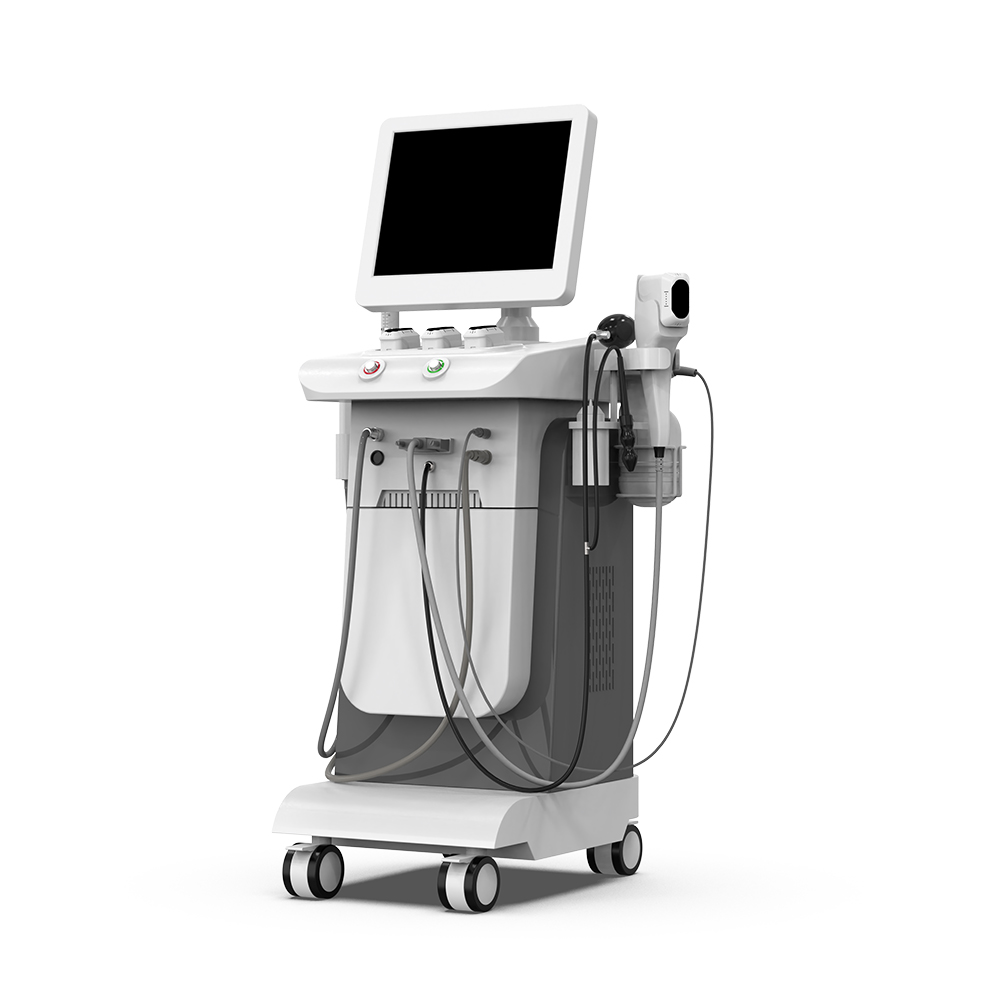
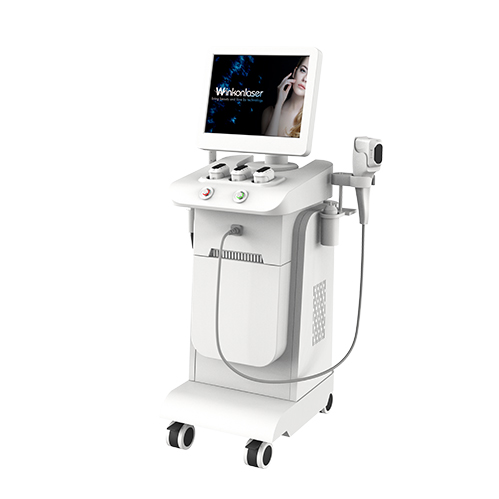
1. Transducer cartridge availability. A professional machine should support at least three interchangeable cartridges covering 1.5mm, 3.0mm, and 4.5mm depths. Some advanced platforms also offer 6.0mm and 13.0mm cartridges for body treatments. The more cartridge options, the wider your treatment range.
2. Energy output and focal zone precision. Not all HIFU energy is created equal. Look for adjustable energy output (typically 0.1–3.0 J per pulse), consistent energy delivery across all pulses, tight focal zone for precise targeting, and line or dot pulse delivery patterns.
3. Real-time visualization (ultrasound imaging). Higher-end HIFU platforms incorporate real-time ultrasound imaging, allowing the practitioner to visualize the SMAS layer and confirm the focal point depth before delivering energy. This significantly reduces operator variability and improves safety.
4. Cooling system. A robust contact cooling system protects the epidermis and keeps the patient comfortable. Look for integrated ice-cooling or a compressor-based cooling tip.
5. Treatment speed. Cartridge pulse rate matters for clinic workflow. A machine delivering 10–15 pulses per second significantly shortens session duration compared to older platforms at 1–3 pulses per second.
6. Consumable costs and cartridge lifespan. This is where the economics matter most. Some HIFU machines use cartridges rated for 500–3,000 pulses before replacement. Lower per-pulse cost directly improves your margin. BeauteMed’s HIFU platforms are designed with extended cartridge lifespans and competitive per-treatment consumable costs.
FAQ
Q1: How many HIFU sessions are needed for visible results?
Most patients see visible results after a single session. A second session at 6–12 months can enhance and prolong the effect. For patients with more significant laxity, 2–3 sessions spaced 3–6 months apart may be recommended.
Q2: Is HIFU painful?
Most patients describe the sensation as a warm pinprick or mild electric shock at each pulse. The discomfort is temporary (milliseconds per pulse). Topical anesthetic can be applied beforehand. Professional machines with advanced cooling systems significantly reduce discomfort.
Q3: What is the downtime after HIFU?
Minimal to none. Patients may experience mild redness and slight swelling for 1–2 hours post-treatment. They can return to normal activities immediately. No bandages, no special aftercare beyond sun protection.
Q4: What skin types can be treated with HIFU?
All Fitzpatrick skin types (I–VI). Because HIFU uses ultrasound rather than laser light, there is no melanin absorption. This makes it safe for darker skin tones without the dyspigmentation risk associated with laser treatments.
Q5: How much does a professional HIFU machine cost?
Professional-grade HIFU machines range from approximately $8,000 to $25,000 depending on cartridge options, ultrasound imaging capability, and brand. Entry-level clinical machines with 3 cartridges typically start around $8,000–$12,000. Premium platforms with real-time imaging range from $15,000–$25,000. Contact BeauteMed for current pricing and package options.
Q6: How does HIFU compare to Ultherapy?
Ultherapy is a brand-name HIFU system (manufactured by Merz). It uses the same core technology. The key difference is that Ultherapy is a single-brand device sold at a premium price, while many clinical-grade HIFU machines offer comparable or superior specifications (more cartridge options, higher energy output, faster treatment speeds) at a lower equipment cost. For most clinics, a non-proprietary clinical HIFU platform offers better value unless brand recognition with patients is the primary concern.
valuating HIFU for your clinic?
BeauteMed offers professional HIFU platforms with 1.5mm, 3.0mm, and 4.5mm cartridges, UL/CE certified safety, and competitive consumable pricing.
Contact our team for detailed specifications, pricing, and to arrange a live demonstration.
📞 +86 15030586598 (WhatsApp)
📧 janebest@winkonlaser.com | 🌐 HIFU Product Page | 🆓 Free Quote

.jpg "Professional 11-Line 5D HIFU Face & Body Contouring Platform")