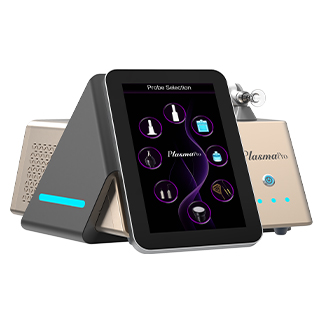




The Quiet Revolution in Skin Rejuvenation Nobody Is Talking About
I sat in Dr. Lin’s clinic in Guangzhou three weeks ago watching a patient walk out after a 45-minute cold plasma facial. No redness. No peeling. No “stay out of the sun for two weeks” warnings. She had come in with uneven texture around her eyes and early laxity along her jawline — the kind of subtle aging that patients notice in the mirror but surgeons won’t touch. When she came back the following week, the change was visibly subtle but real. Her skin looked … alive. Hydrated. Plumper in a way that foundation can’t fake.
That’s the thing about cold plasma. It doesn’t announce itself the way a deep laser peel does. There’s no dramatic before-and-after where the patient looks like they survived a house fire for two weeks. And for a long time, that subtlety actually worked against the technology. Clinics chasing the “wow” effect gravitated toward ablative lasers and aggressive RF. Patients equated downtime with results.
That’s starting to flip. And 2026 is shaping up to be the year cold plasma finally gets the attention it deserves.
What Cold Plasma Actually Is
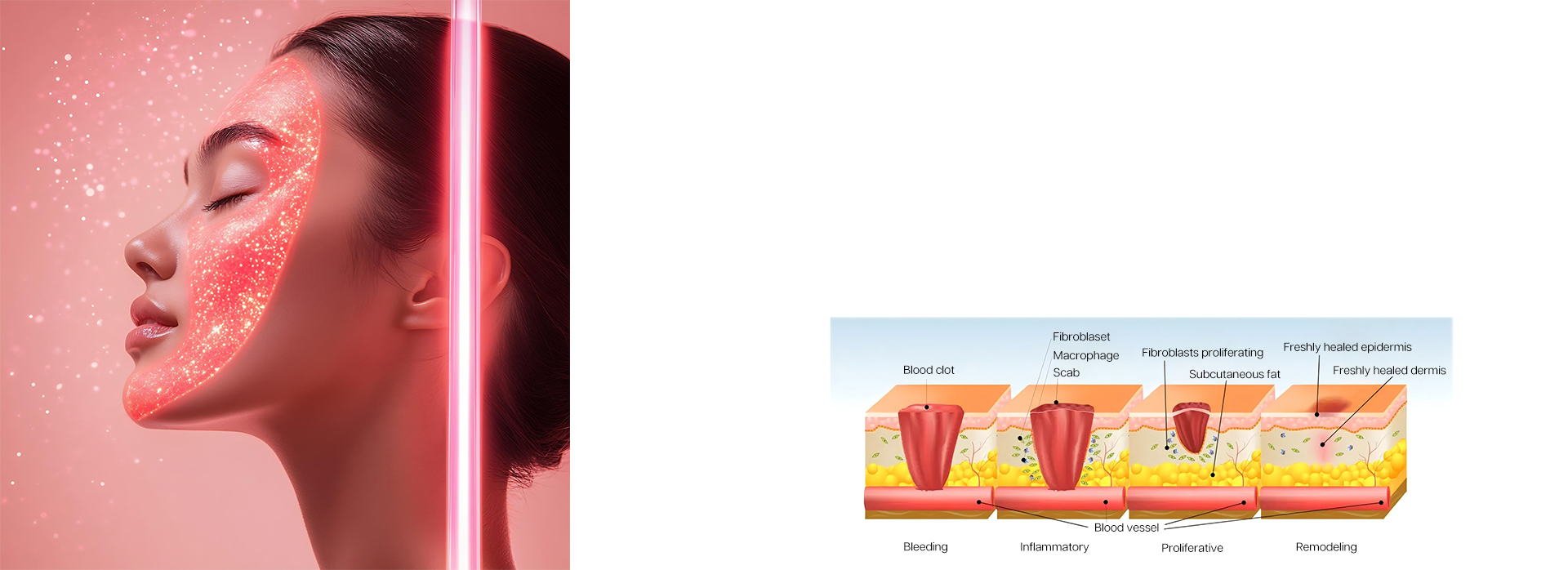
Cold atmospheric plasma (CAP) is the fourth state of matter — ionized gas at near-room temperature, typically 30 to 40 degrees Celsius. When applied to the skin, it generates what scientists call Reactive Oxygen and Nitrogen Species, or RONS. This is the same oxidative signaling that happens naturally in the body during wound healing. The device essentially mimics that biological signal without creating a wound.
The result is a cascade that stimulates fibroblasts — the cells responsible for producing collagen, elastin, and hyaluronic acid — without the thermal damage that lasers and RF rely on. Cold plasma works through biochemistry, not heat. That distinction matters more than most clinic owners realize.
The Mechanism That Changes Everything
What separates cold plasma from every other energy-based modality isn’t the technology itself — it’s what the technology doesn’t do. It doesn’t burn. It doesn’t ablate. It doesn’t trigger a wound-healing cascade by actually wounding the skin.
Instead, it creates a transient change in the skin’s electrical environment. The ionized gas delivers a controlled shower of electrons, ions, and free radicals to the tissue surface. At the molecular level, this activates integrins and growth factor receptors embedded in the cell membrane — proteins that normally stay dormant until the body signals that repair is needed.
A recent 2026 clinical trial using a floating-electrode DBD device at 7.4 watts showed measurable improvements across the board after just eight weekly treatments: increased dermal density, thicker collagen bundles, better skin barrier function, enhanced tissue perfusion. And the side effect profile was essentially non-existent. No thermal adverse events. No post-inflammatory hyperpigmentation. This makes cold plasma one of the few devices genuinely safe for all Fitzpatrick skin types, including types IV through VI that traditionally carry higher risk with laser-based treatments.
Where Cold Plasma Wins
The technology has three distinct competitive advantages that clinic owners should understand before comparing it to their existing devices:
First, it works on thin skin. The upper eyelids, the under-eye hollow, the crepey texture on the neck — these are areas where lasers are risky and RF depth control is imprecise. Cold plasma’s superficial action and non-thermal mechanism make it the safest option for delicate zones that show aging early but tolerate aggressive treatment poorly.
Second, it plays well with others. A 2026 study published in the Iranian Biomedical Journal found that combining cold plasma with topical vitamin C significantly outperformed plasma alone on firmness, elasticity, dermal density, and barrier function — all without thermal damage. This opens up combination protocols that layer plasma with microneedling, chemical peels, or light-based treatments without the recovery stacking that makes aggressive combo treatments impractical.
Third, there is no downtime. Zero. The patient walks out and goes back to work, to dinner, to wherever. For the growing segment of patients who won’t tolerate even a weekend of social downtime, this is the only energy-based option that delivers measurable dermal remodeling without a recovery period.
The Patient Who Benefits Most
The clinical literature and my conversations with practitioners point to a consistent patient profile: someone in their mid-30s to early 50s who is seeing the first signs of laxity and texture changes — a softening jawline, finer skin around the eyes, a slightly crepey neck — but whose skin still has good baseline elasticity and no significant sagging.
This patient is everywhere in 2026. They don’t want surgery. They’re wary of the “overdone” look. They’ve seen too many stretched, expressionless faces on social media and they want the opposite — a refreshed version of themselves. Cold plasma fits that psychology perfectly because it enhances what’s already there rather than replacing it.
The economics work out nicely for clinics, too. A typical cold plasma facial runs between $250 and $500 per session depending on the market, with most patients needing 6 to 8 initial treatments spaced a week apart, then monthly or quarterly maintenance. At the conservative end, a single patient represents $1,500 to $4,000 in annual revenue — and that’s before cross-selling skincare or bundling with other modalities. Compare that to the one-and-done economics of a surgical procedure, and the lifetime value math becomes hard to ignore.
It’s also worth noting that these patients are often the highest lifetime value for a clinic. They return regularly. They buy skincare. They refer friends. A device that brings them in every 4 to 8 weeks for maintenance treatments generates reliable revenue that a one-time surgical procedure never will.
What Clinics Should Look For in 2026
The cold plasma device market has matured significantly in the past 18 months. If you’re evaluating a cold plasma machine for your clinic, here are the specifications that now separate professional-grade equipment from entry-level units:
Power stability matters more than peak power. A device that claims 10 watts but fluctuates by 20% during treatment is less effective than a stable 7-watt system. Look for manufacturers who publish their output stability data, not just maximum specs.
Electrode design has evolved significantly. The latest floating-electrode DBD (dielectric barrier discharge) configurations produce a more uniform plasma field than earlier needle or jet designs, which means more consistent results across the treatment area and less operator dependency.
Treatment protocols should include combination options. Devices that only offer standalone plasma are leaving revenue on the table. The clinical evidence now supports plasma as a penetration enhancer — it creates transient micro-channels that can increase absorption of topical actives by up to 26 times. A machine that integrates easily with post-treatment serums or can be used immediately before RF microneedling or LED therapy is worth considerably more than a plasma-only device.
Why 2026 Is the Inflection Point
Several things are converging. The December 2025 FDA Class II clearance of the first dedicated plasma fibroblast device signaled regulatory maturity. Clinical trial data has moved from “promising” to “conclusive” on multiple endpoints — collagen density, barrier function, skin elasticity, and patient satisfaction. And the cultural shift away from aggressive, high-downtime treatments toward “prejuvenation” and natural-looking maintenance has created the right market conditions.
But the biggest factor might be simpler: patients are more informed than ever, and they’re asking for specific technologies by name. Three years ago, nobody walked into a clinic requesting cold plasma. In 2026, they do. Social media has done for plasma what it did for microneedling five years ago — turned a clinical modality into a consumer trend.
The clinics that recognized microneedling early and built their marketing around it captured an outsized share of that market. Cold plasma is at the same stage right now, and the window won’t stay open forever.
There is a more practical consideration worth mentioning. Reimbursement pathways are starting to open up in certain markets where cold plasma is being classified under therapeutic dermatology rather than purely cosmetic treatment — particularly for acne management and post-inflammatory erythema. Clinics that can code even a portion of their plasma treatments as medical rather than aesthetic gain a significant pricing advantage in markets where insurance or health savings accounts come into play.
The Bottom Line
Cold plasma won’t replace your CO2 laser or your HIFU system. It’s not meant to. It occupies a different lane entirely — the lane between topical skincare and energy-based procedures, where patients want real dermal changes without real downtime. That lane didn’t exist a decade ago. In 2026, it’s one of the fastest-growing segments in medical aesthetics.
For clinic owners, the question isn’t whether cold plasma works — the data is clear. The question is whether waiting another year to add it means watching your competitors build relationships with patients you could have been treating. Dr. Lin, the Guangzhou physician I mentioned at the start, told me she paid off her cold plasma device in eight months — not by replacing her existing treatments, but by attracting patients who had never come through her door before. Patients who wanted results but were too intimidated to book a laser appointment.
If you would like to explore whether a cold plasma system fits your clinic’s treatment portfolio, contact us — we can walk through device specifications, expected ROI based on your patient volume, and how plasma protocols complement your existing treatment menu.