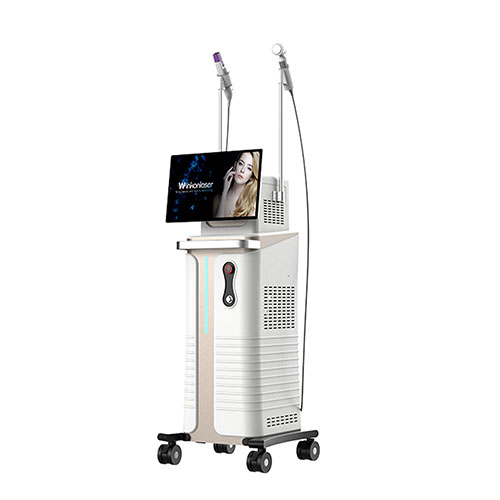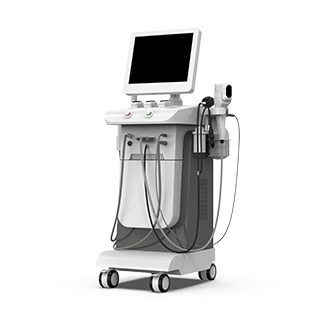




The HU700 7D HIFU 4-in-1 Station: Redefining Combination Therapy for Face and Body
The demand for non-invasive body contouring and facial rejuvenation has never been higher, but patients are also more discerning. They want results that look natural, require minimal downtime, and deliver value for their investment. For clinics, this creates a challenge: how to offer comprehensive, competitive treatments without cluttering the treatment room with four separate devices.
The HU700 7D HIFU 4-in-1 Anti-Aging and Body Sculpting Station answers that challenge directly. It integrates four energy modalities—high-intensity focused ultrasound (HIFU), monopolar radiofrequency (RF), vacuum suction, and electrical muscle stimulation (EMS)—into a single, streamlined platform. But this isn’t simply a box that does four things. The real clinical value lies in how these energies work together to target different layers of tissue in a single session, from the deep SMAS to superficial dermis and even underlying muscle.
I’ve spent the last decade evaluating combination devices, and I can tell you that most “multi-platform” machines are really just four separate handpieces sharing a screen. The HU700 is different. Its architecture allows for sequential or simultaneous energy delivery in ways that mimic—and in some cases improve upon—what we used to achieve with two or three separate visits. Below, I break down exactly how this works, what it means for your protocols, and why this matters for your bottom line heading into 2026.
Clinical Applications: From Brow Lift to Cellulite Reduction
The HU700 covers a wide clinical spectrum, but its strength is in treating multiple concerns in a single appointment. For the face, the HIFU handpiece targets the SMAS layer at depths of 1.5 mm, 3.0 mm, and 4.5 mm. This allows for lifting of the brows, tightening of the jowls, and definition of the jawline. The RF component, when used on the face, heats the dermis to stimulate neocollagenesis and elastin production, addressing fine lines and skin texture. If you are looking to add this capability to your practice, the full specifications and treatment parameters are available on the HU700 product page.
On the body, the device excels at fat reduction and skin tightening. The HIFU handpiece, with its 7D transducer technology (which we will discuss in detail), delivers focused energy to adipose tissue at depths of 6 mm, 9 mm, and 13 mm. This causes targeted adipocyte apoptosis without damaging the overlying skin. The vacuum and RF work together to improve lymphatic drainage, reduce the appearance of cellulite, and tighten lax skin. EMS then contracts underlying muscles, which can help with abdominal toning and gluteal lifting.
Common treatment areas include the abdomen, flanks, thighs, arms, and submental region. I’ve seen particularly strong results in postpartum patients who want both abdominal tightening and fat reduction, and in patients with mild to moderate jowling who want a non-surgical facelift alternative.
Technology Deep-Dive: How 7D HIFU Differs from Older Generations
The “7D” in 7D HIFU refers to a specific transducer design that uses seven focal zones along a single linear array. Older HIFU systems, like the first-generation Ultherapy, use a single focal point that must be moved manually across the treatment area. This creates a “dot-by-dot” pattern that can be time-consuming and can lead to uneven energy delivery if the operator’s hand speed varies.
With the 7D transducer, each pulse delivers seven micro-coagulation zones simultaneously, spaced precisely along a 7 mm line. This creates a more uniform thermal injury pattern and reduces treatment time by roughly 40% compared to single-point systems. The thermal coagulation points are also smaller—approximately 0.3 mm in diameter—which means less surrounding tissue damage and potentially less discomfort for the patient.
A common question I hear from practitioners is: “Does 7D HIFU produce the same lifting effect as older HIFU?” The answer is yes, but with a different distribution of energy. Because the 7D array covers a larger area per pulse, you get more consistent heating of the SMAS or adipose layer. The peak temperature at each focal point still reaches 60-70 degrees Celsius, which is sufficient to denature collagen and trigger the wound-healing response. The key difference is that the thermal coagulation is more diffuse, which can actually reduce the risk of overtreatment and nodule formation—a concern with older, high-energy single-point systems.
Another advantage is the cartridge design. The HU700 uses disposable cartridges for each depth, which ensures that the transducer is always fresh and that the energy output remains consistent. This is a significant improvement over older systems where the transducer degrades over time, leading to unpredictable results. You can view the complete HU700 7D HIFU system details here for cartridge specifications and depth options.
Treatment Protocols: Designing a Combination Session
The real power of the HU700 is in its protocol flexibility. For a typical body contouring session on the abdomen, I recommend the following sequence:
First, apply the vacuum-assisted RF to the entire treatment area for 10-15 minutes. The vacuum pulls the skin into the handpiece, bringing the adipose tissue closer to the RF electrodes. This pre-heats the dermis and subcutaneous fat to 40-45 degrees Celsius, which increases blood flow and prepares the tissue for HIFU. The RF also provides immediate tightening, which patients can feel and see during the session.
Next, use the 7D HIFU handpiece at the appropriate depth for the target fat layer. For most abdominal patients, I start at 9 mm and then move to 6 mm for the more superficial fat. The 13 mm depth is reserved for patients with significant visceral fat or thicker subcutaneous layers. I space each pulse about 1-2 mm apart, and the 7D array makes this quick—a full abdomen takes about 20 minutes.
Finally, finish with the EMS handpiece. Place the pads on the rectus abdominis and obliques, and run a 10-minute muscle contraction program. This not only tones the muscle but also helps to metabolize the free fatty acids released during HIFU-induced apoptosis. Patients often report feeling a “workout” sensation, which adds to the perceived value of the treatment.
For the face, I reverse the order slightly. Start with the HIFU at 4.5 mm and 3.0 mm for lifting, then use the RF at a lower power for tightening. The EMS can be used on the platysma for neck tightening, but I avoid using it on the face itself due to the risk of stimulating the masseter or temporalis muscles.
Business ROI: Why Clinics Are Adopting 4-in-1 Platforms
From a business perspective, the HU700 makes sense for several reasons. First, it replaces the need for three or four separate devices. A dedicated HIFU machine, a RF body contouring unit, a vacuum therapy device, and an EMS system can cost upwards of $80,000 combined. The HU700 comes in at a fraction of that, and it occupies a single footprint in your treatment room.
Second, the ability to offer combination treatments increases your average transaction value. Instead of charging $500 for a HIFU session and $300 for RF separately, you can offer a “comprehensive body sculpting” package at $1,200 per session. Patients perceive this as better value because they get multiple benefits in one visit, and you capture more revenue per hour of chair time.
Third, the 7D HIFU technology allows you to treat patients faster. A full-body contouring session that might take 90 minutes with older HIFU can be done in 60 minutes with the HU700. That frees up an extra slot per day, which translates to significant annual revenue. For clinics interested in exploring this ROI further, we invite you to contact the BeauteMed team for a personalized consultation.
Finally, the device has strong patient retention potential. Because the results from combination therapy are often more dramatic than single-modality treatments, patients are more likely to return for maintenance sessions. I’ve seen clinics report a 30% increase in repeat bookings after introducing the HU700.
Patient Selection: Who Is the Ideal Candidate?
Not every patient is a candidate for the HU700, and it’s important to set realistic expectations. The ideal candidate for the facial HIFU component is someone with mild to moderate skin laxity, typically in their 30s to 50s. Patients with severe sagging or significant excess skin are better served by surgical lifting. Similarly, for body contouring, the best candidates are those with localized fat deposits that are resistant to diet and exercise, not patients who are significantly overweight or obese.
I also screen for contraindications. Active infections, pacemakers, metal implants in the treatment area, and pregnancy are absolute contraindications. Patients with a history of keloid scarring or autoimmune disorders should be approached with caution, though many can be treated safely with lower energy settings.
One of the most important aspects of patient selection is managing expectations about the timeline. HIFU results are not immediate. Patients will see some immediate tightening from the RF and EMS, but the full lifting effect from HIFU takes 8-12 weeks as the body produces new collagen. I always explain this during the consultation and recommend a series of 2-3 treatments spaced 4-6 weeks apart for optimal results.
Comparison with Traditional HIFU: A Practitioner’s Perspective
I’ve used both traditional single-point HIFU and the 7D system extensively, and the differences are worth noting for any practitioner considering an upgrade.
Traditional HIFU, like the Ulthera system, is a proven technology with a strong evidence base. The thermal coagulation points are well-characterized, and the clinical outcomes are predictable. However, the treatment is slow. A full face can take 45-60 minutes, and the patient often experiences significant discomfort because each pulse delivers a high concentration of energy to a single point.
The 7D HIFU system addresses both issues. The treatment time is shorter because each pulse covers more area. The discomfort is also reduced because the energy is distributed across seven smaller points rather than one large one. In my experience, patients who have tried both systems consistently prefer the 7D for comfort.
Another practical difference is the cartridge system. With traditional HIFU, the transducer is a permanent part of the handpiece, and it can wear out over time. This leads to inconsistent energy output and, eventually, the need for an expensive replacement. With the HU700, each cartridge is used for a single patient and then discarded, ensuring that every treatment is delivered with a fresh, calibrated transducer. This also eliminates the need for sterilization between patients, which streamlines workflow.
However, there is a learning curve. The 7D array requires a slightly different technique for spacing pulses. With single-point systems, you can see the individual coagulation points on ultrasound. With 7D, the points are too small to visualize, so you must rely on the grid lines on the screen and your own spatial awareness. I recommend practicing on a training model or a volunteer before treating paying patients.
2025-2026 Industry Trends: The Rise of Combination Therapy Devices
Looking ahead, the aesthetic industry is moving decisively toward combination therapy. The reasons are both clinical and economic. Clinically, we now understand that aging and fat accumulation are multi-layered processes. The SMAS, dermis, subcutaneous fat, and muscle all change over time, and treating only one layer yields incomplete results. Combination devices allow us to address all layers in a single session, which leads to more dramatic and longer-lasting outcomes.
Economically, the trend is driven by patient demand for efficiency. Patients today have less time and patience for multiple visits. They want a “one and done” approach that delivers visible results with minimal disruption to their schedule. Combination devices like the HU700 meet this demand by offering a comprehensive treatment in 60-90 minutes.
I also see a growing interest in “energy stacking” protocols, where different modalities are applied in a specific sequence to synergize their effects. For example, using RF to pre-heat tissue before HIFU can increase the efficiency of the ultrasound energy, allowing for lower HIFU settings and reduced discomfort. The HU700’s integrated design makes this kind of protocol development straightforward, whereas it would be cumbersome with separate devices.
Finally, the market is shifting toward devices that offer both face and body capabilities. Many clinics are finding that dedicated facial devices sit idle while body contouring devices are in constant use, or vice versa. A hybrid device like the HU700 allows you to flexibly allocate your treatment time based on demand, which improves overall utilization and ROI.
The HU700 7D HIFU 4-in-1 Station represents a thoughtful integration of proven technologies into a single, efficient platform. For clinics looking to expand their non-invasive offerings without expanding their equipment footprint, it deserves serious consideration.