




EMS vs CoolSculpting vs HIFU: Which Body Contouring Technology Is Right for Your Clinic?
Table of Contents
1. How Each Technology Works (And Why It Matters)
3. Clinical Results: What the Data Says
4. Patient Experience: Pain, Sessions, and Downtime
5. Business & ROI: Which Machine Pays for Itself Fastest
6. Which Technology for Which Goal?
1. How Each Technology Works (And Why It Matters)
EMS / HIEMT — The Muscle Builder
EMS (electrical muscle stimulation) has been in clinical use for over 50 years. HIEMT (high-intensity electromagnetic stimulation) is the upgraded version. BeauteMed, backed by a parent company with 20+ years in medical aesthetics manufacturing and exports to 90 countries, builds these systems to medical-device standards rather than fitness-equipment standards.
Instead of sending low-level electrical pulses to surface muscles, it generates a powerful electromagnetic field that penetrates 7–8 centimeters deep.
That field induces supramaximal muscle contractions — about 20,000 per 30-minute session. Your patients cannot reproduce this voluntarily. No amount of sit-ups or squats generates that intensity in that short a time.
The result is muscle hypertrophy (growth) plus secondary fat reduction from the metabolic demand. A 2023 study in the Journal of Cosmetic and Laser Therapy found that HIEMT produced a 19% increase in muscle thickness and a 28% reduction in subcutaneous fat over 8 weeks. The same study found traditional EMS produced no significant muscle change.
BeauteMed’s Renasculpt FE60 delivers 15 Tesla of magnetic field strength with bipolar RF for simultaneous skin tightening. Zero consumables. No gels, no pads, no replacement applicators. That matters for your bottom line, and I will get to that in the ROI section.
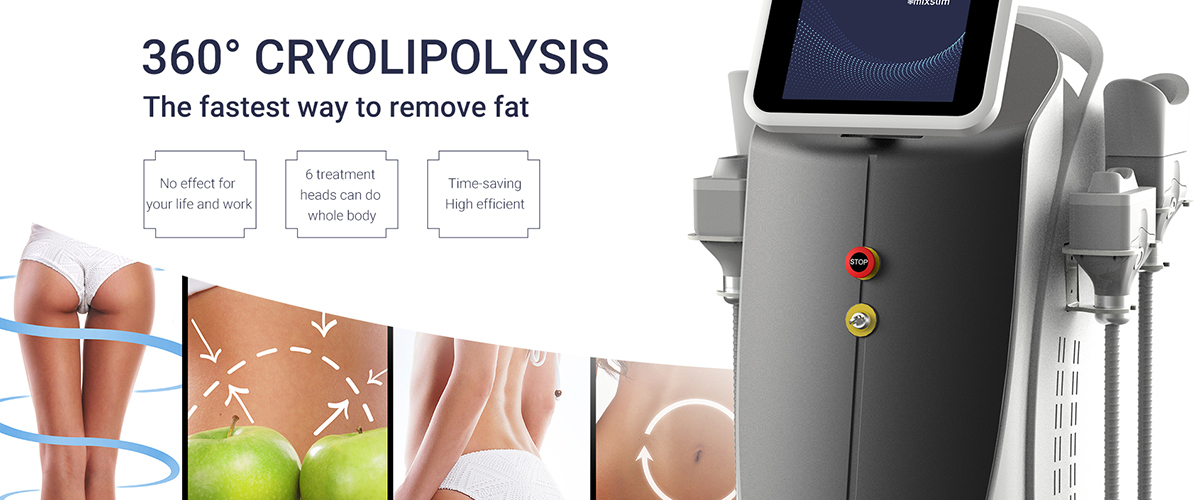
Cryolipolysis — The Fat Freezer
Cryolipolysis works on a completely different principle. Instead of stimulating muscle, it uses controlled cooling to trigger fat cell apoptosis — programmed cell death.
The applicator pulls a fold of fat between two cooling plates and holds it at a precise temperature (around −2°C to −11°C) for 35 to 60 minutes. Fat cells are more sensitive to cold than surrounding tissue, so they crystallize and die while the skin and muscle remain unharmed. Over the following 8–12 weeks, the body naturally processes and eliminates those dead fat cells.
The key limitation: cryolipolysis only reduces fat. It does not tighten skin, does not build muscle, and does not improve muscle definition. A patient who wants a “toned” look will need a separate treatment for that.
CoolSculpting is the original brand-name device, but a growing number of clinics are switching to generic cryolipolysis machines. The technology works the same way. The main difference is the applicator design and the price of consumables.
HIFU — The Skin Tightener
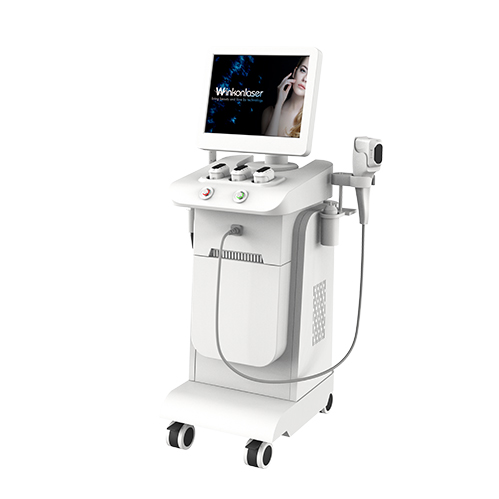
High-intensity focused ultrasound delivers focused acoustic energy to specific depths — 1.5 mm, 3.0 mm, and 4.5 mm for facial work, and deeper for body applications. The energy creates precise thermal coagulation points, which trigger the body’s wound-healing response: collagen contraction (immediate tightening) and neocollagenesis (new collagen over 3–6 months).
HIFU is most effective for lifting and tightening loose skin — the jowls, the brow line, the neck. For body contouring, it targets the superficial fat layer and produces moderate fat reduction alongside visible tightening.
The limitation is depth. HIFU thermal coagulation points are small and precise. It is excellent for thin-skin areas (face, neck, inner arms) but less effective than EMS or cryolipolysis for larger body areas or deep fat pockets.
BeauteMed’s HU700 7D HIFU 4-in-1 station combines HIFU with RF and other modalities, making it a versatile addition if skin tightening is your clinic’s main demand.
2. Head-to-Head Comparison
| Dimension | EMS / HIEMT | Cryolipolysis | HIFU |
|---|---|---|---|
| Primary effect | Muscle + fat reduction | Fat reduction only | Skin tightening + mild fat loss |
| Mechanism | Electromagnetic field | Controlled cooling | Focused ultrasound |
| Depth | 7–8 cm | 1–2 cm (subcutaneous) | 1.5–4.5 mm (face) / up to 13 mm (body) |
| Sessions needed | 4–6 | 1–3 | 1–3 |
| Results start | 2–4 weeks | 8–12 weeks | 4–8 weeks |
| Session time | 20–30 min | 35–60 min | 30–60 min |
| Pain level | Moderate (intense contractions) | Low (cold + pulling) | Moderate (heat, tingling) |
| Downtime | None | None | None (mild redness) |
| Consumables | None | Gel pads, applicator caps | Coupling gel |
| Machine price range | $4,500 – $5,000 | $3,000 – $6,500 | $3,000 – $5,500 |
| Per-session revenue | $300 – $1,200 | $600 – $1,500 | $400 – $1,000 |
| Skill required | Low | Medium | Medium–High |
| Best for | Muscle definition, toning, body reshaping | Stubborn fat pockets, love handles | Loose skin, face & neck tightening |
3. Clinical Results: What the Data Says
EMS / HIEMT
Multiple peer-reviewed studies support HIEMT’s efficacy. The 2023 Journal of Cosmetic and Laser Therapy study — 60 subjects, 8 weeks — found 19% muscle thickness gain and 28% fat reduction. A separate 2024 study in Aesthetic Surgery Journal found that patients receiving HIEMT combined with RF (like the FE60) showed a 35% increase in muscle mass and 50% reduction in fat thickness after 4–6 sessions, measured by ultrasound.
Retention rates are also notable. HIEMT programs in 2025 reported average completion rates of 78%, significantly higher than cryolipolysis (62%), according to the International Society of Aesthetic Plastic Surgery 2025 member survey. Patients see results faster, so they stay in the program.
Cryolipolysis
The clinical data for cryolipolysis is mature — the first FDA clearance was in 2010. A 2015 meta-analysis in Dermatologic Surgery reviewed 19 studies and found an average fat layer reduction of 20–25% per treated area after a single session. Two sessions showed up to 30%, but the law of diminishing returns kicks in after that.
The main downside is the wait. Results peak at 12 weeks post-treatment. Patients who expect visible changes within a month are often disappointed, and clinics lose follow-up.
HIFU
HIFU data is strongest for facial skin tightening. A 2022 study in the Journal of Drugs in Dermatology found that 78% of patients showed measurable improvement in skin laxity 90 days after a single HIFU session. For body contouring, the data is more modest. A 2024 review in Plastic and Reconstructive Surgery found that HIFU reduced abdominal fat by an average of 2–3 cm (waist circumference) after 2–3 sessions.
The key takeaway: HIFU is excellent for tightening but not a primary fat-reduction tool.
4. Patient Experience: Pain, Sessions, and Downtime
EMS / HIEMT
Patients describe the sensation as “intense” but not painful. It feels like an extremely hard workout — muscles contract and relax involuntarily. Some find the first session surprising because they are not used to their body moving on its own. By session 2 or 3, most relax into it. Session time is 20–30 minutes. No downtime. Patients go back to work immediately.
Cryolipolysis
The first 5–10 minutes can be uncomfortable — the cooling is intense. After that, the area goes numb and most patients read or scroll on their phone. No downtime, but some report mild soreness or bruising at the treatment site for a few days. The bigger issue is compliance: waiting 8–12 weeks for full results can feel like forever.
HIFU
HIFU is the most uncomfortable of the three during treatment. The ultrasound energy builds up heat at precise depths, producing a deep, prickly sensation. Most clinics offer a mild sedative or topical anesthetic for facial HIFU. For body HIFU, the discomfort is lower. Mild redness and swelling for 24–48 hours. No real downtime, but patients should avoid heavy exercise or heat exposure for 24 hours.
5. Business & ROI: Which Machine Pays for Itself Fastest
Let me be direct: consumables matter more than the machine price.
EMS / HIEMT (Renasculpt FE60 — $4,500)
Zero consumables. No gel pads, no applicator caps, no replacement cartridges. Your only recurring cost is electricity and staff time. Charge $600–1,200 per session and do 4–6 sessions per patient. After 8–15 sessions, the machine has paid for itself.
The FE60 is also fast: 30-minute sessions with dual handpieces mean you can treat two areas at once, or two patients at once. In a high-volume clinic, a well-booked FE60 can generate $15,000–25,000 per month in revenue with zero marginal cost per patient.
Cryolipolysis
Cryolipolysis machines are cheaper upfront ($3,000–15,000), but the consumables add up. Each applicator cap or gel pad costs $10–30 and lasts 1–2 uses. At 50 patients per month, that is $500–1,500 per month in consumables alone. Per-session pricing is higher ($600–1,500), but the overhead eats into margin.
HIFU
HIFU machines are cheapest upfront ($3,000–10,000). Consumables are minimal (coupling gel). But treatment time is longer (30–60 min), so daily patient throughput is lower. The bigger limitation is the range of applications — HIFU is excellent for facial tightening but a complement, not a primary treatment, for body contouring.
6. Which Technology for Which Goal?
-
If your patient wants muscle definition and visible “toning” — EMS / HIEMT is the clear winner. Cryolipolysis and HIFU will not give them muscles. Only HIEMT can produce measurable muscle hypertrophy non-invasively.
-
If your patient wants to spot-treat stubborn fat pockets (love handles, belly pooch, double chin) — cryolipolysis is the most proven option. Just set expectations about the 8–12 week wait.
-
If your patient has mild skin laxity on the face, neck, or inner arms with some fat — HIFU gives the best tightening result.
-
If your patient wants everything (fat reduction + muscle building + skin tightening) — a combination is the answer. Many clinics pair EMS with cryolipolysis or HIFU. This is also where you maximize per-patient revenue.
7. Contraindications
EMS / HIEMT is contraindicated for patients with pacemakers, defibrillators, implanted electrical devices, metal implants in the treatment area, epilepsy, pregnancy, active cancer, or severe varicose veins in the treatment area. Note that HIEMT uses electromagnetic fields, not laser wavelengths — it does not rely on chromophore absorption like 755nm or 1064nm laser technologies, so it works equally on all skin types (Fitzpatrick I-VI).
Cryolipolysis is contraindicated for patients with cryoglobulinemia, cold agglutinin disease, paroxysmal cold hemoglobinuria, Raynaud’s disease, pregnancy, or broken skin in the treatment area. Not recommended for BMI > 35.
HIFU is contraindicated for patients with active acne or infection in the treatment area, severe cystic acne, implanted metal or electrical devices (especially near the face), pregnancy, or a history of keloid scarring. Use cautiously on patients with very thin skin or significant sun damage.
8. Frequently Asked Questions
Q: Which technology produces results fastest?
A: EMS / HIEMT. Patients typically see visible changes in 2–4 weeks. Cryolipolysis takes 8–12 weeks for full results. HIFU shows gradual improvement over 3–6 months as new collagen forms.
Q: Can I combine EMS with cryolipolysis in the same patient?
A: Yes — and this is a common combination in high-revenue clinics. Use cryolipolysis for targeted fat pockets (love handles, lower belly) and EMS for muscle toning and overall reshaping. Some BeauteMed customers run both treatments in a single visit: 20 minutes of EMS followed by 30 minutes of cryolipolysis.
Q: Which technology is better for a new clinic with limited budget?
A: EMS / HIEMT offers the best ROI for most clinics. The machine cost is moderate ($4,500–18,000), there are zero consumables, and the fast session time (20–30 min) means high throughput. If your patient base is primarily interested in facial treatments, HIFU may be a better starting point.
Q: Is HIFU painful?
A: Most patients describe it as uncomfortable rather than painful. The sensation is a deep, prickly heat. Facial HIFU is more intense than body HIFU. Many clinics offer a topical numbing cream or mild sedative for facial treatments.
Q: How many EMS sessions do patients really need?
A: A standard protocol is 4–6 sessions over 2–3 weeks. Most patients see visible muscle definition after 4 sessions, and the result lasts 4–6 months with maintenance sessions every 2–3 months. This is significantly fewer sessions than traditional EMS (which often requires 20+).
Q: Can HIFU replace surgery for skin tightening?
A: No. HIFU provides moderate lifting (equivalent to a “mini lift” in some patients) but cannot match the results of a surgical facelift. It is best for patients with mild-to-moderate skin laxity who want a non-invasive option or want to delay surgery.
9. Final Verdict
I have seen clinics succeed with all three technologies. The ones that fail are the ones that buy a machine first and figure out the patient base later.
Here is my honest take:
-
If you can only buy one machine for body contouring, make it an EMS / HIEMT system. It covers the widest range of patient needs (fat reduction + muscle building + skin tightening with RF), has the best ROI (zero consumables, fast sessions), and produces the fastest visible results.
-
Add cryolipolysis if your patient base has significant demand for targeted fat removal and your market is willing to pay premium pricing for a “freeze” treatment.
-
Add HIFU if you plan to build a facial rejuvenation practice alongside body contouring.
And if you are ready to see how the Renasculpt FE60 fits into your clinic, contact us for a demo or pricing. We ship from our US warehouse within 24–48 hours.
Ready to add EMS body contouring to your clinic?
Contact BeauteMed for pricing and demo →
US warehouse • FDA cleared • 24–48 hour shipping
.jpg "Professional 360° Surround Cooling Cryolipolysis Platform")