


The Device That Treats What Lasers Cannot: Cold Plasma in the Aesthetic Clinic
About eight months ago I walked into a clinic in Birmingham that had a problem. They were turning away patients with active acne — not because they didn’t want to treat them, but because every tool they owned made inflammatory acne worse. Laser on inflamed skin? No. Chemical peel on broken barrier? Absolutely not. Microneedling over pustules? You’d get sued. So they sent these patients home with a topical prescription and a “come back when it calms down.” Most never came back.
When I stopped by again last month, the same clinic had a stack of before-and-afters on their consultation desk showing exactly those kinds of cases — angry, cystic, inflamed skin — now clear and calm after three sessions. The thing that changed was a cold plasma device sitting in the corner of the treatment room, small enough to be unremarkable, quiet enough you’d forget it was on.
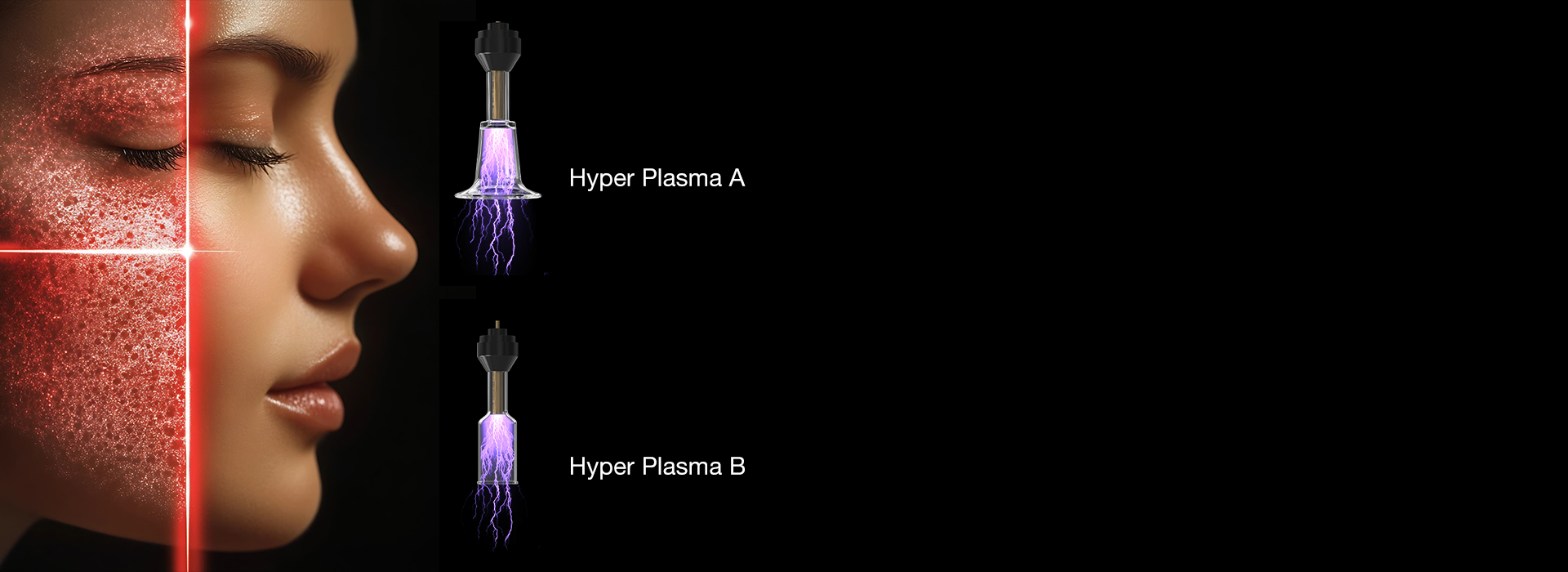
That’s the thing about cold plasma in 2026. It doesn’t look like much. There’s no dramatic flash of light, no zapping sound, no satisfying crackle that makes patients feel like something is “happening.” It’s a faint purple glow at the tip of a glass wand, and the treatment feels like a cool breeze on the skin. I’ve watched patients fall asleep during sessions. Yet under the surface, the biology it sets in motion is louder than pretty much anything else in the treatment room.
What “Cold” Actually Means Here
Plasma has a branding problem in aesthetics. Most practitioners hear the word and think of fibroblast plasma pens — those tiny devices that create a controlled burn on the skin to tighten eyelid creases, the ones that leave those characteristic little dots that take a week to heal. That’s thermal plasma. It works by creating micro-injuries through heat. Effective, sure, but it hurts, and the downtime is real.
Cold plasma is the opposite end of the physics spectrum. It’s an ionised gas — often argon or helium passed through an electrical field — that stays at room temperature or just barely above it. You can hold the tip against your palm and feel nothing. The energy in the plasma field doesn’t manifest as heat; it manifests as a cocktail of reactive oxygen and nitrogen species, free electrons, and UV photons at very low intensities. These particles interact with the skin surface in ways that are genuinely different from any other energy-based device on the market.
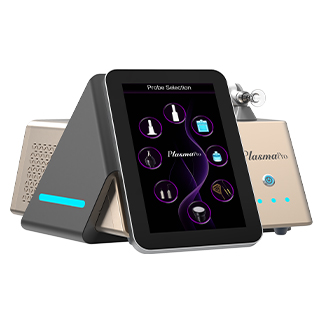
The BeauteMed PS30 that I’ve been watching in clinics recently is a 2-in-1 system that produces both cold plasma (for treatment) and a gentle hot plasma mode (for targeted disinfection when needed). The cold mode generates a stable plasma field at the glass tip, and when you bring it close to the skin — you don’t even need to touch — the reactive species transfer across the gap and start doing their work. The whole setup runs off a standard wall outlet, takes about ninety seconds to warm up, and the “consumable” is basically the electricity and an alcohol wipe between patients.

The Biology Is More Interesting Than the Marketing
Most cold plasma marketing materials focus on “sterilization” because that’s the easy thing to explain. And yes, the device kills bacteria — the reactive oxygen species shred bacterial cell walls, and the UV component disrupts DNA replication. A decent cold plasma device will knock out 99% of surface bacteria including Cutibacterium acnes in under two minutes of exposure. That part is well-established and not particularly controversial.
But the reason I’ve been paying attention to this technology isn’t the antimicrobial effect. It’s what happens to the skin barrier itself during treatment.
Cold plasma temporarily disrupts the adhesion molecules between corneocytes in the stratum corneum — the outermost layer of dead skin cells that normally acts as a brick wall against anything you put on the skin. This disruption creates transient micro-channels that stay open for somewhere between fifteen minutes and two hours after treatment, depending on the plasma dose and the individual patient’s skin. During that window, the absorption rate of anything you apply to the skin goes up by a factor of ten to twelve.
Think about what that means in practice. You’ve just done a cold plasma pass over the full face. Now you apply your post-treatment serum — hyaluronic acid, growth factors, peptides, whatever your protocol calls for. Instead of 95% of it sitting on the surface and evaporating, a meaningful fraction actually reaches the viable epidermis. The same product you’ve been using for years suddenly delivers dramatically better results. Patients notice. They come back.
I’ve talked to practitioners who are using cold plasma as a standalone treatment and others who use it purely as a pre-treatment step before applying exosomes, PDRN, or tranexamic acid. Both approaches work. The standalone approach builds a treatment menu item with nearly zero consumable cost. The pre-treatment approach makes your existing protocols more effective without adding more than seven or eight minutes to the appointment.
Why Acne Clinics Are Paying Attention
Treating active acne with energy-based devices has always been a clinical contradiction. You want to reduce inflammation and kill bacteria, but most devices that accomplish those goals also heat the tissue, which can aggravate pustular and cystic lesions. Dermatologists have been stuck between “do nothing” and “do something that might make it worse” for years.
Cold plasma changes that equation because it’s actively anti-inflammatory. The reactive nitrogen species downregulate COX-2 and other inflammatory mediators in the skin. At the same time, the antimicrobial effect hits the bacteria that are driving the breakout. You’re treating both the cause and the symptom simultaneously, without adding thermal stress to tissue that’s already inflamed.
The clinical workflow that’s emerging in 2026 goes something like this: cold plasma pass over the affected areas (five to seven minutes), followed by a calming mask or serum application that leverages the temporarily increased permeability. Two to three sessions spaced a week apart, then maintenance every four to six weeks. No antibiotics. No harsh topicals that wreck the barrier. No downtime where the patient hides at home for three days. Just a steady reduction in lesion count and erythema that patients can see in before-and-after photos by week two.
The Business Math Nobody Talks About
Let me put some numbers on this because I know clinic owners reading this are running a business first and a science experiment second.
A cold plasma treatment session for acne or general skin rejuvenation takes about twenty minutes from start to finish. The device runs on mains power. The only consumable is an alcohol wipe for cleaning the glass tip between patients, and occasionally replacing the glass electrode if it gets damaged — which, in a well-run clinic, happens maybe once every few months. So your per-treatment consumable cost is effectively zero.
Compare that to hydradermabrasion (tips and serums: about eight to twelve dollars per treatment), microneedling (cartridges and numbing cream: roughly twelve to eighteen dollars), or chemical peels (acid solutions and neutralizers: five to ten dollars). A cold plasma facial priced at a hundred and fifty dollars — which is conservative for a technology that’s still novel enough to command premium pricing — is producing roughly a hundred and forty-nine dollars of gross profit per session. At three treatments a day, five days a week, that’s over a hundred and ten thousand dollars a year in contribution margin from one device that costs somewhere between three and six thousand dollars to purchase.
The ROI math here is almost too simple. Even if you price it at eighty dollars to compete with standard facials, you’re still profitable from month one. The constraint isn’t cost — it’s whether you can educate enough patients about what the treatment actually does.
Educating Patients: The Real Challenge
And that’s the honest problem with cold plasma. It doesn’t have an obvious “wow” factor during the treatment. No lights. No heat. No satisfying peeling phase that patients photograph for Instagram. You have to actually explain the mechanism and show the before-and-after images to make the sale.
The clinics that are succeeding with this technology are the ones that invested in a good skin analyzer and use it to document baseline conditions before the first plasma session. When a patient sees their own skin analysis data improve — reduced porphyrin levels, decreased erythema scores, better hydration readings — they become believers. The objective data closes the gap between what the treatment feels like (nothing) and what it’s actually doing (quite a lot).
I’ve also seen clinics use a simple demonstration to build trust: they treat one half of the patient’s face on the first visit and point out the immediate difference in texture and tone under the treatment room lights. The visual side-by-side is persuasive in a way that verbal explanation can’t match. Half-face demonstrations are old-school sales technique, but they work especially well for technologies like cold plasma where the mechanism isn’t intuitively obvious.
Where the Technology Is Headed
The cold plasma market was valued somewhere around a hundred and sixty million dollars globally in 2025, and projections put it near five hundred million by 2034. Most of that growth is being driven by dermatology and aesthetics rather than the industrial applications that originally developed the technology. The atmospheric pressure plasma jet segment — which is what aesthetic devices like the PS30 use — holds the largest market share at over sixty percent.
What’s coming next is interesting. Several manufacturers are working on pulsed plasma delivery systems that vary the ionization energy in real time based on skin impedance measurements. The idea is that different skin conditions — acne lesions versus photoaged skin versus healthy tissue — present different electrical impedance signatures, and the plasma dose can be tuned accordingly. It’s a level of precision that moves cold plasma out of the “wellness” category and into something closer to targeted therapeutics.
There’s also movement toward home-use devices, though I’m skeptical about how effective those can be. The plasma field strength is directly proportional to the input power, and battery-operated handhelds simply can’t deliver the same reactive species density as a mains-powered clinical unit. The home devices might work for maintenance between clinic visits, but they won’t replace the in-office treatment for active conditions. At least not in this generation of the technology.
Is It Right for Your Clinic?
If most of your revenue comes from injectables, cold plasma probably isn’t going to displace your core business. But if you’re seeing a meaningful percentage of patients with acne, rosacea, perioral dermatitis, or compromised barrier function — conditions where you currently have to turn people away or refer out — it fills a gap that almost nothing else addresses.
If you’re doing a lot of microneedling or laser treatments, cold plasma works as an adjunct. Run a plasma pass before your standard protocol and the increased absorption makes your post-treatment products more effective. Some practitioners are also using it after ablative procedures to reduce infection risk and speed up re-epithelialization, though the evidence for that application is still mostly anecdotal.
If you’re in a competitive market and looking for a point of differentiation, cold plasma offers something genuinely rare: a treatment that works on skin types and conditions that most other devices can’t safely touch, with essentially zero consumable cost, and a mechanism of action that’s backed by a growing body of peer-reviewed research rather than marketing fiction.
That clinic in Birmingham I mentioned at the beginning? They bought their cold plasma unit in January. By April, they’d added fourteen new active-acne patients who had previously been told “come back when your skin clears up.” Five of those patients have since booked other treatments — laser hair removal, IPL photorejuvenation, a course of skin boosters. The plasma device didn’t just generate its own revenue. It brought people through the door who had been told “no” by every other clinic in town, and it turned them into long-term customers who trust the practice.
That’s a harder metric to put in a spreadsheet. But if you’ve been in this industry for any length of time, you know it’s the one that actually matters.