




The Fat Reduction Technology Nobody Talks About — And Why It Works
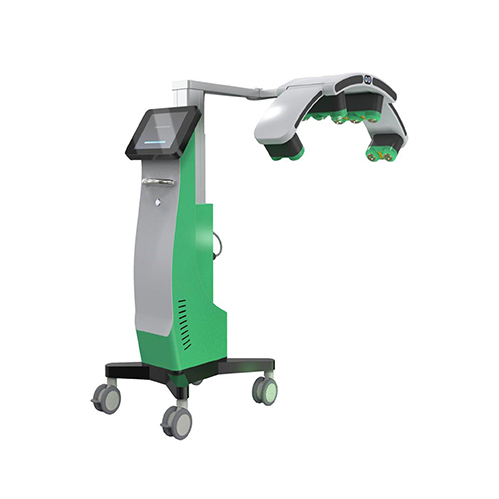
I had a conversation a few weeks ago with a clinic owner in Sydney who had just taken delivery of a 10D lipolaser system. She’d been running a successful aesthetics practice for eight years — injectables mostly, some IPL, a HIFU device she’d bought in 2023 that was doing steady business. The lipolaser was her first move into the body contouring space, and she was nervous about it. “I don’t want to sell something that doesn’t work,” she said. “My patients trust me.”
Fair concern. The body contouring market has more than its share of overhyped devices with underwhelming results. Radiofrequency treatments that feel warm but don’t change anything measurable. Ultrasonic cavitation machines sold on AliExpress with specs copied from legitimate manufacturers. Cryolipolysis handles that cost more than the machine itself. It’s a mess out there, and clinic owners who’ve been burned before are understandably cautious.
What made her take the plunge on laser lipolysis specifically was the mechanism. Unlike most body contouring modalities, laser lipo doesn’t rely on heating tissue, freezing tissue, or mechanically disrupting cell membranes. It works through a photochemical pathway that’s been studied for decades in the context of laser-assisted liposuction, now adapted into a non-invasive format that requires no incisions, no anesthesia, and no recovery time.
What 635nm Actually Does to Fat Cells
The key wavelength in the 10D Lipolaser system is 635nm red laser light. This is not an arbitrary number — 635nm sits in the absorption spectrum of cytochrome c oxidase, an enzyme in the mitochondrial electron transport chain. When adipocytes are exposed to 635nm light at the right power density and duration, the laser energy triggers a temporary pore formation in the cell membrane. Fat cells don’t die; they develop small channels through which triglycerides leak into the interstitial space.
From there, the lymphatic system does the actual work. The released lipids enter lymphatic circulation and are eventually processed by the liver. This is why post-treatment protocols for laser lipo always emphasize hydration and gentle movement — you need the lymphatic pump working efficiently to clear the mobilized fat. It’s also why results aren’t instantaneous. The biological process takes 48 to 72 hours to complete one full cycle, and most patients need six to eight sessions spaced a few days apart to see measurable circumference reduction.
This mechanism matters because it avoids the inflammatory cascade that cryolipolysis triggers. Fat freezing kills adipocytes through controlled cold injury, which produces an inflammatory response that peaks about two weeks after treatment. That inflammation is necessary for the body to clear the dead cells, but it’s uncomfortable and occasionally visible. Laser lipo sidesteps this entirely. No cell death, no inflammation, no bruising. Just a controlled release of stored triglycerides through a temporary membrane pore.
The 532nm Green Component and Why It Matters
The 10D combines 635nm red with 532nm green laser diodes in a multi-wavelength array. The green wavelength serves a different purpose. At 532nm, laser energy is absorbed primarily by hemoglobin and oxyhemoglobin in superficial blood vessels. This causes a mild photothermal effect that increases microcirculation in the treatment area. Better blood flow means more efficient lymphatic clearance of released lipids. The two wavelengths work in sequence — red to release, green to flush.
There’s also a cosmetic benefit to the 532nm component that most manufacturers don’t emphasize enough. The increased microcirculation improves skin oxygenation in the treated area, which over a course of six to eight sessions produces a visible improvement in skin texture and tone. Patients getting abdominal treatments often notice that the skin over the treated area looks smoother and less congested even before significant circumference reduction occurs. This is essentially free value — a side benefit of the wavelength selection rather than a separate treatment protocol.
Where This Fits in a Multi-Device Practice
Laser lipo doesn’t replace anything. It fills a specific gap between non-invasive treatments that patients perceive as too gentle and invasive procedures they’re not ready for. Someone who says “I want to lose two inches off my waist but I’m not doing surgery” is a laser lipo candidate. Someone who wants to spot-reduce stubborn fat on the inner thighs or upper arms that hasn’t responded to diet and exercise — also a candidate.
In a practice that already offers ultrasonic cavitation, laser lipo serves as an alternative for patients who didn’t respond well to cavitation or who want to try a different mechanism. Cavitation works through mechanical disruption — sound waves create microbubbles in the interstitial fluid that implode against fat cell membranes. Some patients’ tissue characteristics make them less responsive to mechanical disruption but highly responsive to photochemical stimulation. Having both modalities lets you match the technology to the patient rather than trying to make one device work for everyone.
It also pairs well with radiofrequency skin tightening. After a course of laser lipo, the treated area has lost volume, and some patients — particularly those over forty or who’ve lost significant weight — benefit from a round of RF to tighten the overlying skin. The two treatments together produce a contour improvement that neither achieves alone. Several of the clinics I’ve spoken with bundle laser lipo and RF into a single body contouring package at a price point that makes the combination more attractive than booking them separately.
What Patients Actually Experience
The treatment itself is anticlimactic in the best possible way. Pads with laser diodes are strapped to the treatment area — abdomen, flanks, thighs, upper arms, submental area — and the device runs for twenty to thirty minutes. Patients feel nothing during treatment, or occasionally a very mild warmth from the 532nm diodes. Many read their phones or take a nap. Afterward, they’re instructed to drink water and do ten to fifteen minutes of light activity — walking around the clinic or on a treadmill if you have one — to stimulate lymphatic flow.
There’s no recovery period, no compression garments, no activity restrictions. Patients go straight back to work. The only post-treatment instruction is hydration, and honestly, that’s good advice regardless of what treatment they came in for.
Results become measurable after three to four sessions. The standard protocol is two sessions per week for four weeks, with circumference measurements taken at baseline and then before each session. Most patients lose between two and four centimeters from the waist circumference over a full course, with some losing significantly more depending on their baseline adiposity and compliance with post-treatment lymphatic stimulation.
The Numbers on the Balance Sheet
A course of eight laser lipo sessions in a major city typically sells for eight hundred to twelve hundred dollars, depending on the market and the area being treated. The treatment takes roughly twenty-five minutes of staff time — five minutes for setup and pad placement, twenty minutes of device run time where the staff member can be doing other things. The consumable cost per session is essentially zero. No gels, no disposables, no single-use tips. The laser diode pads are reusable and rated for thousands of hours of operation.
If you’re selling an eight-session course at a thousand dollars, and each session costs you twenty-five minutes of a staff member’s time at roughly thirty dollars an hour fully loaded, your labor cost per session is about twelve fifty. Over eight sessions, labor costs you a hundred dollars. The device purchase — somewhere in the four to eight thousand dollar range for a quality 10D system — pays for itself within the first five to ten full courses. After that, the margin on each course is roughly ninety percent. In an industry where most treatments carry consumable costs that eat twenty to forty percent of the service price, that’s unusual enough to deserve attention.
Choosing the Right Device
Not all laser lipo systems deliver the same results. The differentiating factors are laser diode quality, pad configuration flexibility, and power output consistency. Low-quality diodes produce inconsistent wavelengths that don’t reliably trigger the photochemical pore formation. Poor pad design leads to uneven coverage of the treatment area, which produces asymmetrical results that patients definitely notice.
The 10D configuration — ten pads with mixed 635nm and 532nm diodes, covering treatment areas from submental to full abdomen — is becoming the standard format for clinics that want one device that handles all common treatment sites. If you’re considering adding body contouring to your practice, the most useful thing you can do is talk to clinics that have been using the specific device you’re evaluating for at least six months. Ask to see before-and-after photos from their actual patients — not manufacturer-supplied marketing images.
The Sydney clinic owner I mentioned at the beginning called me three weeks after our initial conversation. She’d completed her first full treatment course with six patients. Five had rebooked for additional body areas. One had brought in her sister. “It’s not dramatic,” she said, “but it’s real, and it’s measurable, and patients appreciate that.” In the body contouring space, that qualifies as a strong endorsement. If you’re evaluating equipment options and want to understand which technology fits your specific practice, contact the BeauteMed team for a detailed discussion of specifications, pricing, and expected ROI for your clinic volume.